



What's Happening?
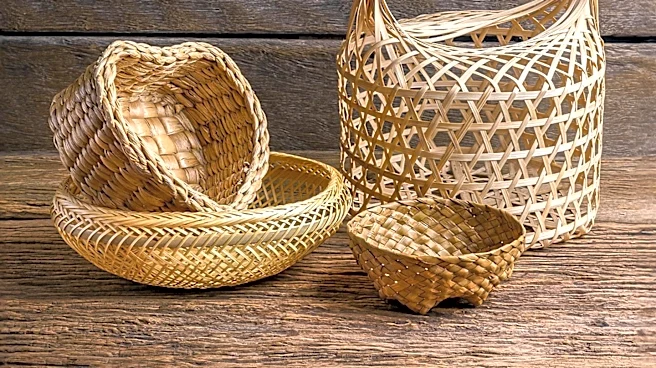
Pack baskets, traditionally used by Native American tribes for carrying provisions, are gaining recognition as a stylish and functional storage solution in U.S. home decor. These woven baskets, with a history dating back nearly 3,000 years, offer a rustic
aesthetic that can add character and warmth to a room, serving as an alternative to sterile plastic bins. They are ideal for storing items like blankets, pillows, and children's toys. While vintage pack baskets, often found on secondhand sites like Etsy and eBay, can be more expensive due to their rugged straps and aged patina, new mass-produced options are also available from retailers like Dick's Sporting Goods. The Wabanaki Confederacy, an Indigenous group in the Northeastern U.S. and Eastern Canada, is notably connected to the origin of these baskets, which were later adopted by French fur trappers.
Why It's Important?
The re-emergence of pack baskets in home decor signifies a growing U.S. consumer interest in unique, historically rich, and aesthetically pleasing storage solutions. This trend impacts the home goods market by creating demand for products that offer both utility and a distinct 'rustic' or 'farmhouse' style. For small businesses and artisans, particularly those specializing in traditional crafts, it presents an opportunity to produce and sell authentic or inspired versions of these baskets. The appreciation for vintage items also supports the secondhand market, promoting sustainable consumption practices. Furthermore, the historical context of pack baskets, rooted in Native American traditions, brings a cultural dimension to home decor, encouraging consumers to learn about the origins and craftsmanship behind their household items. This can foster a greater appreciation for indigenous cultures and their contributions to practical design.
What's Next?
As the popularity of rustic and vintage-inspired decor continues, pack baskets are likely to become more widely available through various retail channels, including specialized home decor stores and online marketplaces. Manufacturers may introduce modern interpretations of pack baskets, incorporating contemporary materials while retaining the traditional aesthetic. There could also be an increased focus on ethical sourcing and fair trade practices for baskets produced by indigenous communities, ensuring that the cultural heritage is respected and creators are compensated fairly. Consumers can expect to see more diverse designs, sizes, and materials, catering to different interior styles and storage needs. The trend may also inspire other traditional craft items to find new life as functional and decorative elements in modern homes.
Beyond the Headlines
The adoption of pack baskets into mainstream U.S. home decor carries deeper cultural and ethical implications. It highlights a broader societal movement towards valuing authenticity, craftsmanship, and items with a story, moving away from purely mass-produced goods. This trend can contribute to a greater awareness and appreciation of Native American heritage and traditional crafts, potentially leading to educational initiatives or collaborations with indigenous artisans. However, it also raises questions about cultural appropriation if the items are mass-produced without acknowledging or benefiting their original creators. The shift from utilitarian outdoor gear to indoor decor also reflects a changing relationship with nature and history, where elements of the past and the outdoors are brought into personal living spaces to create a sense of grounding and character. This suggests a desire for a more curated and meaningful home environment.