


What's Happening?
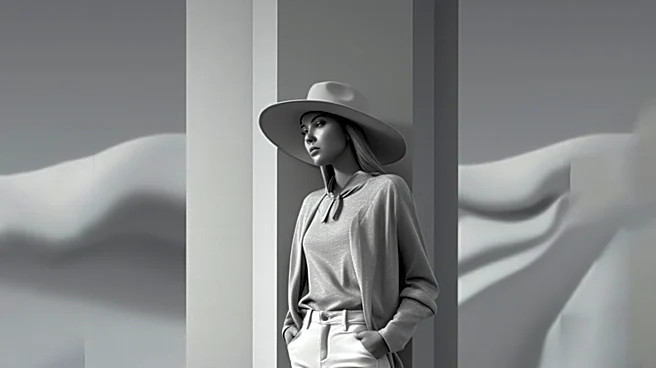
Harris Reed's Fall 2026 collection for Nina Ricci marks his final season as the brand's creative director. The collection, presented as his swansong, drew inspiration from the opulent aesthetics of 18th-century court fashion, specifically referencing
the grandeur of Versailles. This historical elegance was then juxtaposed with the free-spirited and rebellious energy associated with the Glastonbury Festival. The design approach aimed to create a striking collision of these seemingly disparate elements, blending aristocracy with rock 'n' roll influences, and chaos with elegance. Reed, known for his pioneering work in gender-fluid fashion and nonbinary aesthetics, launched his own brand in 2020, which gained significant attention for its theatrical and maximalist designs. His appointment at Nina Ricci brought a distinct vision to the established French fashion house, aiming to infuse it with a modern, rebellious spirit while respecting its heritage.
Why It's Important?
Harris Reed's departure from Nina Ricci signifies a notable shift in the creative direction of a historic French fashion house. His tenure was marked by an attempt to modernize the brand's image and appeal to a younger, more diverse audience through his signature gender-fluid and maximalist designs. This move reflects a broader trend in the fashion industry where established luxury brands seek to reinvent themselves by appointing designers known for their contemporary and often unconventional approaches. The impact of Reed's collections on Nina Ricci's market position and brand perception will be evaluated as the industry observes the brand's next creative chapter. For Reed, this transition allows him to refocus on his eponymous brand, which has already garnered significant attention, including dressing Harry Styles for a historic US Vogue cover. His influence on challenging traditional gender norms in fashion remains a significant contribution to the industry.
What's Next?
Following Harris Reed's final collection for Nina Ricci, the fashion industry will be anticipating the announcement of his successor at the French luxury house. The new creative director will face the challenge of building upon Reed's recent efforts to revitalize the brand while establishing their own distinct vision. For Harris Reed, his focus will likely return to expanding and evolving his own brand, which has a strong identity rooted in gender-fluid and theatrical designs. This could involve new collections, collaborations, or further ventures that leverage his unique aesthetic and growing influence. The industry will also be watching to see how his departure impacts Nina Ricci's future collections and its strategic direction in the competitive luxury market, particularly in how it continues to engage with contemporary fashion trends and consumer expectations.
Beyond the Headlines
Harris Reed's journey at Nina Ricci, though concluding, highlights the ongoing dialogue within the fashion industry regarding tradition versus innovation and the evolving definition of luxury. His approach, blending historical opulence with modern rebelliousness and gender fluidity, pushed boundaries and challenged conventional notions of design. This reflects a broader cultural shift towards inclusivity and self-expression, where fashion is increasingly seen as a medium for personal identity rather than strict adherence to gendered norms. The juxtaposition of Versailles' grandeur with Glastonbury's free spirit in his final collection symbolizes this tension and synthesis. His work encourages a re-evaluation of how heritage brands can remain relevant in a rapidly changing world, suggesting that embracing diverse perspectives and bold creative choices can lead to both commercial success and cultural impact. His influence extends beyond mere aesthetics, contributing to a more open and fluid understanding of fashion.