










What's Happening?
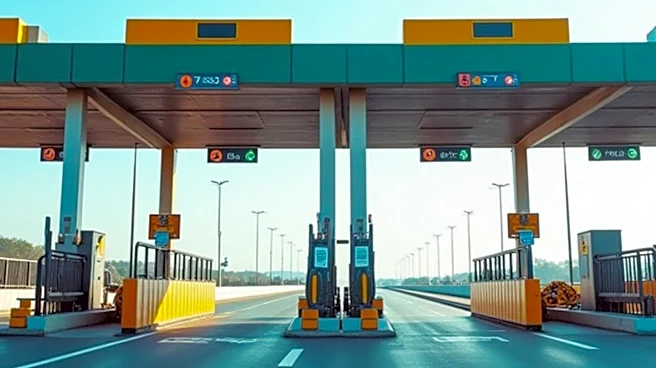
The imposition of Canadian tolls on cargo moving through the St. Lawrence Seaway is affecting U.S. Great Lakes ports, according to maritime industry experts. While the U.S. provides toll-free access through its portion of the Seaway, Canada continues
to collect tolls, which can significantly increase costs for vessel operators and cargo owners. This disparity is seen as a barrier to economic competitiveness and growth for U.S. ports and industries reliant on maritime commerce. The issue has been highlighted as a priority for U.S.-Canada trade discussions, with calls for toll parity to support American manufacturing and maritime industries.
Why It's Important?
The toll disparity between the U.S. and Canada on the St. Lawrence Seaway has broader implications for U.S. economic policy and trade relations. The additional costs imposed by Canadian tolls can hinder the competitiveness of U.S. ports and industries, affecting trade flows and investment decisions. Addressing this issue is crucial for supporting the U.S. maritime industry, which is vital for national economic resilience and supply chain stability. The situation underscores the importance of equitable trade agreements and infrastructure policies that promote economic growth and industrial development in the Great Lakes region.
What's Next?
The issue of Seaway toll parity is expected to be a key topic in ongoing U.S.-Canada trade discussions. Policymakers and industry stakeholders will likely advocate for measures to reduce or eliminate Canadian tolls, aiming to enhance the competitiveness of U.S. ports and industries. The outcome of these discussions could influence future trade policies and infrastructure investments in the region. Additionally, the resolution of this issue may set a precedent for addressing similar trade and infrastructure challenges in other strategic waterways and regions.