






What's Happening?
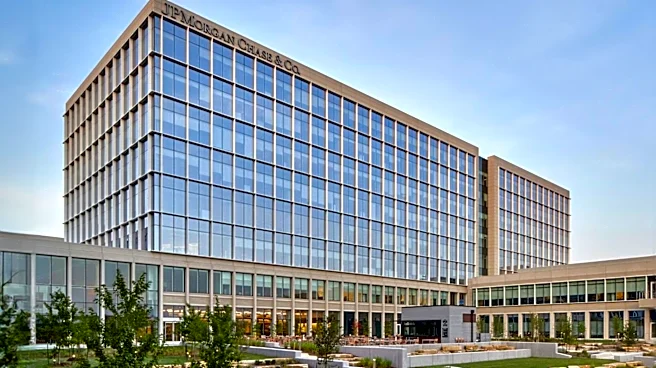
JPMorgan Chase & Co. analysts have reduced their price target for Intel (NASDAQ: INTC) stock from $85.00 to $80.00, while maintaining a "neutral" rating. This adjustment was reported on Friday, October 30, 2026, by Benzinga. The new price objective suggests
a potential upside of 21.65% from Intel's current trading price. This follows a series of similar actions from other financial firms; Royal Bank Of Canada reiterated a "sector perform" rating with a $100.00 target, Stifel Nicolaus set a $90.00 objective, and TD Cowen lowered its target from $95.00 to $75.00 with a "hold" rating. UBS Group also downgraded Intel from a "buy" to a "hold" rating with a $90.00 target, and Cantor Fitzgerald decreased its target from $125.00 to $90.00.
Why It's Important?
The collective reduction in price targets and ratings from multiple prominent financial institutions signals growing concerns among analysts regarding Intel's future performance and market position. This trend could influence investor confidence, potentially leading to further stock price volatility for Intel. For the broader U.S. technology and semiconductor industries, these analyst actions highlight challenges such as weak PC demand, supply chain bottlenecks, and intense competition in the data center and AI segments. Intel's significant investments in foundry services and quantum computing, while offering long-term growth potential, also introduce near-term spending and execution risks that analysts are factoring into their outlooks. This cautious sentiment could impact investment flows into the semiconductor sector.
What's Next?
Intel's fourth-quarter guidance, which projects revenue between $15 billion and $16 billion (below the expected $17.1 billion) and adjusted earnings of approximately $0.25 per share (below the expected $0.45), suggests continued headwinds. Management has indicated that the PC slowdown could persist through at least the first half of 2027. Additionally, a reported blast at Intel's Israel facility is expected to cause a revenue disruption of $300 million to $600 million. These factors, combined with ongoing memory shortages and higher component prices, are likely to keep pressure on Intel's stock and financial performance in the coming quarters. Investors will be closely watching for signs of recovery in PC demand and the successful execution of Intel's strategic initiatives.
Beyond the Headlines
The analyst downgrades and price target reductions for Intel underscore a critical period for the chipmaker as it navigates a complex market transition. Intel is attempting to regain its technological leadership and expand its foundry business amidst fierce competition from rivals like AMD and Nvidia, particularly in the high-growth data center and AI markets. The challenges highlighted by analysts, such as the risk of not generating free cash flow in 2027, point to the significant capital expenditures required for advanced chip manufacturing and R&D. This situation reflects a broader industry trend where the cost and complexity of developing cutting-edge semiconductors are escalating, potentially leading to further consolidation or strategic partnerships within the global chip ecosystem.