


What's Happening?
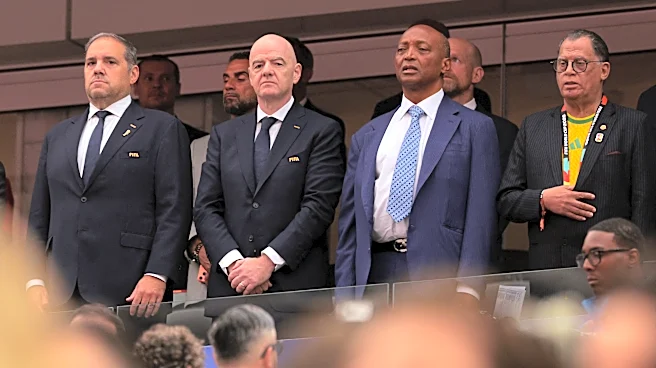
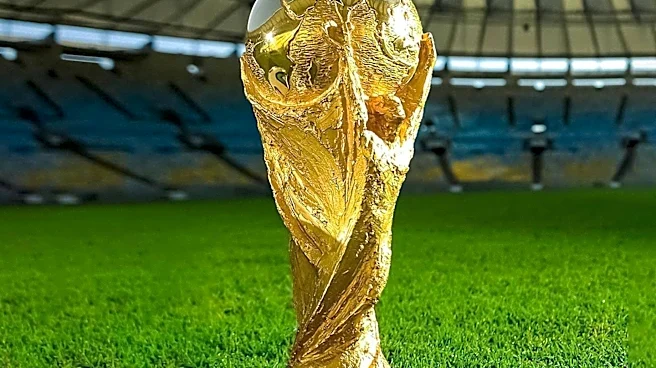
The 2026 FIFA World Cup, hosted by Mexico, the United States, and Canada, generated over $15 billion in revenue, making it the most profitable tournament in history. FIFA President Gianni Infantino plans to capitalize on this success by creating FIFA Forward
Enterprises, a subsidiary to manage FIFA's commercial assets, including the World Cup and other tournaments. The plan involves selling a portion of the subsidiary to private investors, raising concerns about the commercialization of football. Infantino's approach has drawn criticism from UEFA, which argues that FIFA is overstepping by treating football as a commodity. The tournament highlighted FIFA's shift towards a corporate model, prioritizing revenue generation over traditional sporting values.
Why It's Important?
FIFA's strategy reflects a broader trend of commercialization in sports, where financial interests increasingly influence decision-making. This shift could impact the integrity of football, as commercial considerations may overshadow sporting values. The potential sale of FIFA's commercial assets to private investors raises questions about governance and control within the organization. UEFA's opposition indicates a growing divide within the football community, with implications for the sport's future governance and structure. The outcome of FIFA's plans could set a precedent for other sports organizations, influencing how they balance commercial interests with maintaining the sport's integrity.
Beyond the Headlines
The controversy surrounding FIFA's commercial strategy highlights the tension between maintaining the sport's traditional values and adapting to a rapidly changing economic landscape. The involvement of private investors could lead to conflicts of interest, affecting decision-making and the sport's global governance. Additionally, the focus on revenue generation may impact smaller football nations, which could struggle to compete in an increasingly commercialized environment. The situation underscores the need for a balanced approach that considers both financial sustainability and the sport's cultural significance.