







What's Happening?
Upside Foods, a leading cultivated meat company, has announced a significant advancement in its production capabilities, now able to produce over one million pounds of cultivated chicken annually. This milestone follows a 10,000-fold scale-up in production,
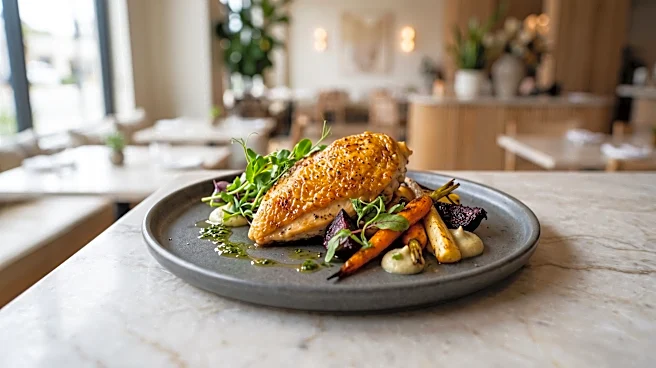
utilizing 20,000-liter bioreactors. The company has secured its second FDA No Questions Letter and second USDA label approval, making it the first company to receive U.S. regulatory clearance for two distinct cultivated meat products. Upside Chicken, which combines cultivated chicken cells with plant-based ingredients like soy protein isolate, pea fiber, and olive oil, is now available at several restaurants, universities, and corporate campuses across California. Notable chefs Thomas Keller and Nancy Silverton are also collaborating with Upside Foods, developing dishes featuring the cultivated chicken. Additionally, Upside Foods has become the first cultivated meat company to achieve halal certification, expanding its market reach.
Why It's Important?
This development marks a critical turning point for the cultivated meat industry, addressing long-standing skepticism about its ability to achieve commercial scale and affordability. By producing over one million pounds of cultivated chicken annually at a cost comparable to premium organic chicken, Upside Foods is making cultivated meat more accessible to a broader consumer base. This scalability has significant implications for food sustainability, as cultivated meat production claims to use less water, land, and energy compared to traditional meat farming. It also offers potential benefits in food safety by reducing risks associated with E. coli, salmonella, and antibiotic resistance. The entry into mainstream dining establishments and the achievement of halal certification further validate cultivated meat as a viable and inclusive food option, potentially shifting consumer perceptions and dietary choices in the U.S. food market.
What's Next?
Following this commercial launch, Upside Foods plans to continue expanding its production footprint to meet growing demand and support additional products. The company is also initiating a new fundraising round, leveraging its recent achievements in scale, pricing, and market availability to attract investors who have shown waning enthusiasm for the cultivated meat sector. While currently focused on foodservice, Upside Foods aims to expand into retail in the future, making cultivated meat available in grocery stores. The company is also actively challenging state bans on cultivated meat in Florida and Texas through legal action, which could influence the regulatory landscape for the industry nationwide. Continued collaborations with chefs and educational institutions are expected to further introduce and normalize cultivated meat to consumers.
Beyond the Headlines
The commercialization of cultivated chicken by Upside Foods signals a potential long-term shift in the U.S. food system, moving towards more sustainable and ethical protein sources. This advancement could challenge traditional agricultural practices and create new economic opportunities in cellular agriculture. The halal certification is particularly significant, opening up a substantial market segment and demonstrating the product's versatility and adherence to diverse dietary requirements. This could set a precedent for other cultivated meat companies to pursue similar certifications, fostering greater inclusivity. Furthermore, the success of Upside Foods may spur increased research and development in the broader alternative protein sector, accelerating innovation in food technology and potentially influencing public policy regarding food production, animal welfare, and environmental sustainability. The ongoing legal battles against state bans highlight the evolving regulatory and political landscape surrounding novel food technologies.