





What's Happening?
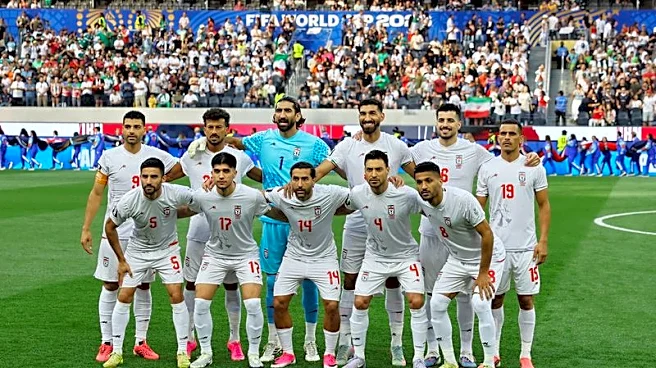
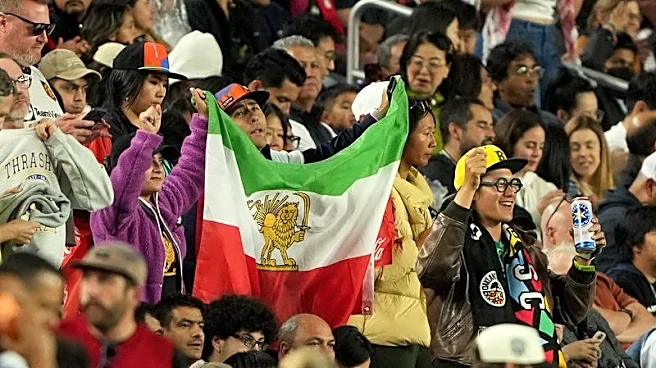
Iran's national soccer team is facing logistical challenges during the World Cup due to U.S. visa restrictions. The team, based in Tijuana, Mexico, is unable to stay in the U.S. for their matches at SoFi Stadium in Inglewood, California. Fans have traveled
from across the U.S. to support the team, despite the political tensions and security measures at their hotel. The Iranian team has been forced to relocate from Tucson to Tijuana, and several team officials were denied U.S. visas. The restrictions have been criticized for impacting the team's preparation and morale, with the Iranian Football Federation planning to lodge a complaint with FIFA.
Why It's Important?
The situation underscores the intersection of sports and politics, highlighting how international relations can affect sporting events. The restrictions on Iran's team reflect broader geopolitical tensions between the U.S. and Iran, impacting not only the athletes but also fans and the broader diaspora. This case illustrates the challenges faced by teams from countries with strained diplomatic relations, potentially affecting their performance and participation in international competitions. The issue also raises questions about the role of sports as a unifying force and the impact of political decisions on global sporting events.
What's Next?
Iran's Football Federation plans to file a complaint with FIFA regarding the restrictions, which could lead to further discussions about the intersection of sports and politics. The team's performance in the World Cup may be affected by the logistical challenges and psychological impact of the restrictions. The situation may also prompt discussions within FIFA and other international sports organizations about how to handle similar issues in the future. The outcome of these discussions could influence policies on how international sporting events are organized and the role of politics in sports.