
What's Happening?
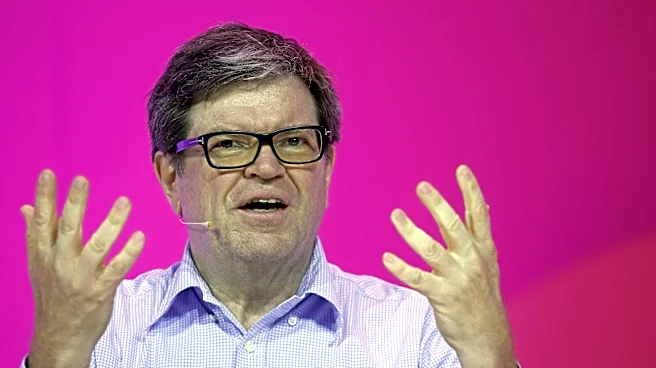
Yann LeCun, a prominent figure in AI and Meta’s former chief AI scientist, has publicly accused Anthropic CEO Dario Amodei of exaggerating the dangers associated with open-weights AI models. LeCun contends
that Amodei's warnings serve to limit competition within the AI industry, thereby benefiting Anthropic's proprietary products. This accusation stems from a resurfaced video clip from July 25, 2023, where Amodei testified before a U.S. Senate subcommittee, discussing potential risks of open models as they scale. LeCun's critique, voiced during a public debate on November 22, 2026, questions Amodei's motives, suggesting his stance is a bid for control over AI development. Anthropic, however, maintains that it has never advocated for a ban on open models, asserting that discussing risks is distinct from demanding prohibition.
Why It's Important?
This disagreement between two influential figures in the AI community highlights a critical challenge for U.S. policymakers: distinguishing between genuine safety concerns and commercial interests in the rapidly evolving AI landscape. If regulators were to implement stricter rules on open models based on perceived risks, it could stifle innovation and limit opportunities for startups that rely on accessible AI technologies. Conversely, a balanced framework that supports safe open development could attract more investment and collaboration. For Anthropic, a company that emphasizes safety, these accusations could impact its reputation, as its safety-focused positioning might be perceived as a strategic move to create a competitive 'moat.' The debate also underscores the ongoing tension between open-source AI development, which promotes accessibility and innovation, and closed-source models, which offer greater control but concentrate power among a few large corporations.
What's Next?
The ongoing debate between proponents of open-weights AI models and those advocating for more controlled, closed systems is likely to continue influencing policy discussions in the U.S. Congress. Legislators, who have previously shown interest in AI risk, as evidenced by Amodei's 2023 Senate testimony, will need to carefully consider these arguments. Any future proposals concerning open-weights AI will likely reignite this specific argument, forcing policymakers to weigh the potential for misuse against the benefits of widespread access and innovation. The outcome of this debate could shape the regulatory environment for AI in the U.S., impacting how AI technologies are developed, deployed, and accessed by businesses and the public.
Beyond the Headlines
The deeper implications of this dispute extend to the fundamental philosophy of AI development and its societal impact. LeCun's comparison of Amodei's rhetoric to historical efforts to suppress knowledge raises ethical questions about control over technological progress. The fear of AI causing human extinction, which LeCun has dismissed as excessive, reflects a broader societal anxiety about advanced technologies. This conflict also touches upon the concentration of power in the tech industry; if open models are restricted, it could further entrench the dominance of a few large companies that can afford to develop and control proprietary AI. The debate ultimately forces a re-evaluation of who benefits from AI development and who bears the risks, highlighting the need for transparent and equitable governance frameworks.