







What's Happening?
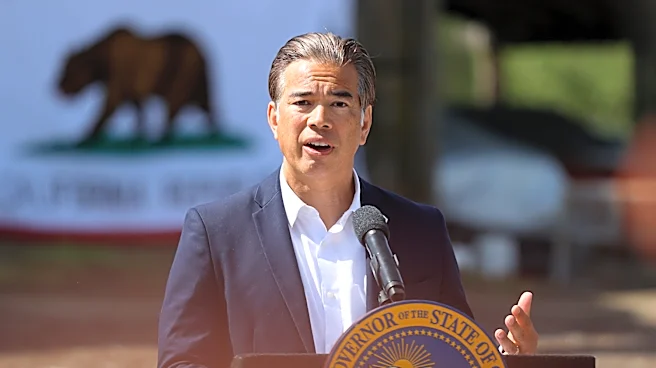
California Attorney General Rob Bonta has ceased settlement negotiations with Paramount regarding its proposed merger with Warner Bros. Discovery. This development comes as the planned merger faces increasing legal scrutiny and challenges. The Attorney General's
decision to cancel talks indicates a hardening stance from regulatory bodies concerning the consolidation of major media entities. The merger, if approved, would combine two significant players in the entertainment industry, potentially reshaping the competitive landscape of content creation and distribution. The ongoing legal challenges highlight concerns about market concentration and potential impacts on consumers and competition within the media sector. The specific reasons for the cancellation of settlement talks were not detailed, but it suggests that the state of California is prepared to pursue further action or maintain its opposition to the deal as currently structured.
Why It's Important?
This action by the California Attorney General is significant because it underscores the growing regulatory hurdles faced by large-scale corporate mergers, particularly in sectors with substantial public interest like media and entertainment. For the U.S. entertainment industry, the cancellation of these talks could signal a more aggressive approach from state attorneys general in scrutinizing deals that might lead to reduced competition. A failed merger could impact the strategic directions of both Paramount and Warner Bros. Discovery, potentially leading to alternative strategies for growth, such as smaller acquisitions, organic expansion, or even divestitures. Consumers could be affected by changes in content availability, pricing, and diversity if the merger were to proceed or be blocked. The decision also sets a precedent for how future media consolidations might be reviewed, emphasizing the importance of addressing antitrust concerns from both federal and state levels. The financial implications for the companies involved, including stock performance and investor confidence, are also considerable as the uncertainty surrounding the merger continues.
What's Next?
With settlement talks canceled, the path forward for the Paramount and Warner Bros. Discovery merger becomes less clear and potentially more litigious. The California Attorney General could proceed with legal action to block the merger, or impose stringent conditions if it were to move forward. Both companies will likely need to reassess their strategies, either by preparing for a prolonged legal battle, attempting to renegotiate terms to satisfy regulatory concerns, or exploring alternative growth avenues. The outcome of this situation could influence other ongoing or planned mergers in the U.S. media landscape, prompting companies to conduct more thorough antitrust assessments before announcing deals. Stakeholders, including investors, employees, and content creators, will be closely watching for further announcements regarding legal proceedings or revised merger proposals. The focus will now shift to whether the companies can address the Attorney General's concerns or if the merger will ultimately be abandoned due to regulatory pressure.
Beyond the Headlines
The California Attorney General's intervention in the Paramount merger talks highlights a broader trend of increased regulatory scrutiny over corporate consolidation, reflecting concerns about market power and its impact on various aspects of society. Beyond the immediate business implications, this situation touches upon the ethical considerations of media ownership and the potential for reduced journalistic diversity or creative output when fewer companies control more content. The legal challenges also bring to light the tension between corporate ambitions for scale and efficiency versus public interest in maintaining competitive markets and diverse voices. This case could contribute to a re-evaluation of antitrust enforcement in the digital age, where traditional market definitions are often challenged by new business models and technologies. The long-term implications could include a shift in how media companies approach growth, potentially favoring partnerships or organic development over large-scale mergers to avoid regulatory roadblocks and public backlash.