









What's Happening?
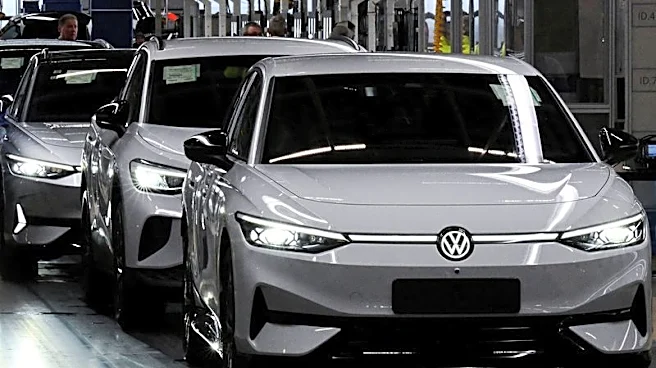
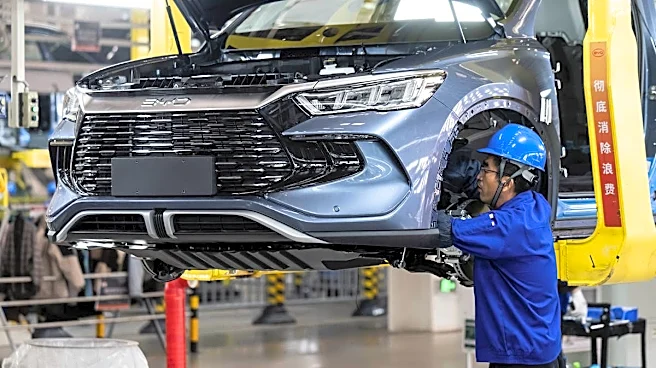
Volkswagen is considering a significant reduction in its workforce, potentially cutting 50,000 more jobs, as part of a strategy to boost competitiveness. This move comes as the company faces declining profits, intense competition, particularly from China,
and high operational costs. CEO Oliver Blume, in an internal memo, emphasized the need for efficiency improvements to avoid factory closures. The automaker is currently at a 20% cost disadvantage compared to its industry peers, prompting a global reassessment of its operations across various brands and regions. Labor representatives have expressed dissatisfaction with the restructuring plans, which include reducing production capacity and streamlining model offerings.
Why It's Important?
The potential job cuts at Volkswagen highlight the broader challenges facing the automotive industry, including the need to adapt to changing market dynamics and cost structures. For the U.S., this development could impact the automotive supply chain and related industries, potentially leading to job losses and economic shifts in regions dependent on automotive manufacturing. The move underscores the pressure on traditional automakers to remain competitive in a rapidly evolving market, where electric vehicles and new technologies are reshaping consumer preferences and industry standards.
What's Next?
Volkswagen's next steps will likely involve detailed negotiations with labor unions and further strategic planning to implement the proposed job cuts and efficiency measures. The company may explore alternative uses for underutilized factories to mitigate the impact of potential closures. Stakeholders, including employees, suppliers, and regional economies, will be closely monitoring these developments, as they could have significant implications for employment and economic stability in affected areas.