



What's Happening?
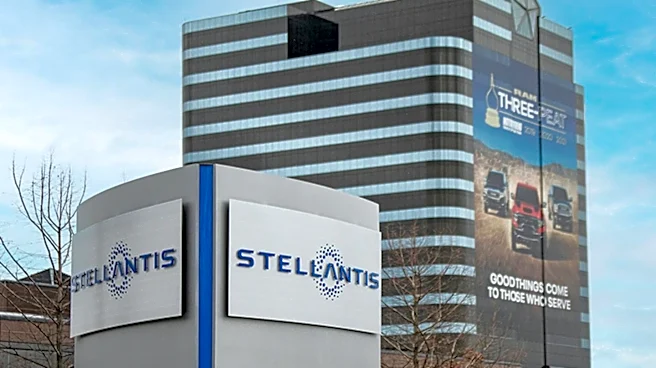
Stellantis N.V., a multinational automotive corporation, has clarified that its Dodge brand is not, and has never been, a product of General Motors (GM). This statement addresses persistent consumer confusion regarding the corporate lineage of iconic
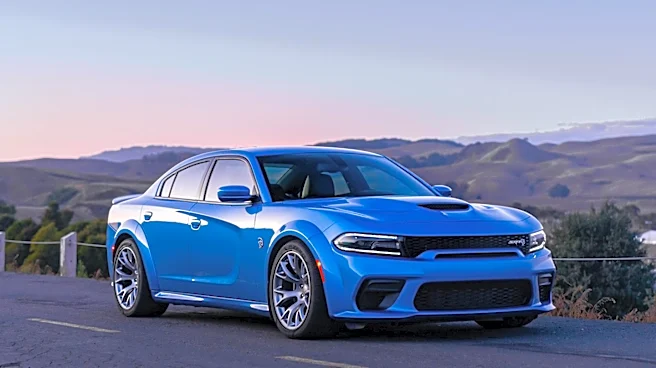
American automotive brands. Dodge's history is rooted in the Chrysler Corporation, which it joined after being founded by the Dodge brothers in 1900. Chrysler operated independently, competing directly with GM and Ford for decades. A pivotal shift occurred in 2009 when Chrysler merged with Fiat, forming Fiat Chrysler Automobiles (FCA). Subsequently, FCA merged with PSA Group in 2021 to create Stellantis. Throughout these transitions, Dodge remained separate from GM, maintaining its distinct engineering and styling language focused on performance and value. Stellantis now positions Dodge as its brand for passion and performance, with strategic decisions made by Stellantis leadership, independent of GM.
Why It's Important?
This clarification is important for consumers and the automotive market as it reinforces the distinct brand identities and corporate strategies within the industry. Understanding that Dodge operates under Stellantis, a global entity separate from GM, helps to delineate competitive landscapes and investment decisions. For Stellantis, it solidifies Dodge's unique market position, emphasizing its performance heritage and future direction, including investments in high-performance electric vehicles. For GM, it underscores the continued separation of major automotive groups, each pursuing independent technological and market strategies. This distinction is crucial for investors, analysts, and consumers to accurately assess brand value, market share, and future product development trajectories in a rapidly evolving automotive sector.
What's Next?
Dodge's future under Stellantis will involve continued investment in its performance-oriented identity, with a significant focus on electrification. The brand plans to introduce high-performance electric vehicles that aim to uphold its legacy. This strategic direction will be executed by a global team of executives across Europe and the Americas, operating independently of General Motors' own electric vehicle strategies. As the automotive industry moves towards electrification and autonomous driving, while technological collaborations between rivals may occur, the corporate structures and brand identities of Stellantis and GM are expected to remain distinct, with each company pursuing its own path in product development and market positioning.
Beyond the Headlines
The persistent confusion surrounding brand ownership highlights the complex and often opaque nature of corporate mergers and acquisitions in the automotive industry. For consumers, this can impact brand loyalty and purchasing decisions, as perceptions of quality, reliability, and heritage are often tied to corporate parentage. For the industry, the clear delineation of brands like Dodge under Stellantis, separate from GM, underscores the importance of maintaining distinct brand narratives and engineering philosophies. This separation allows for diverse product offerings and competitive innovation, preventing market homogenization. It also reflects broader trends in global automotive consolidation, where large multinational groups like Stellantis manage a diverse portfolio of brands, each with its own strategic role and target demographic.