






What's Happening?
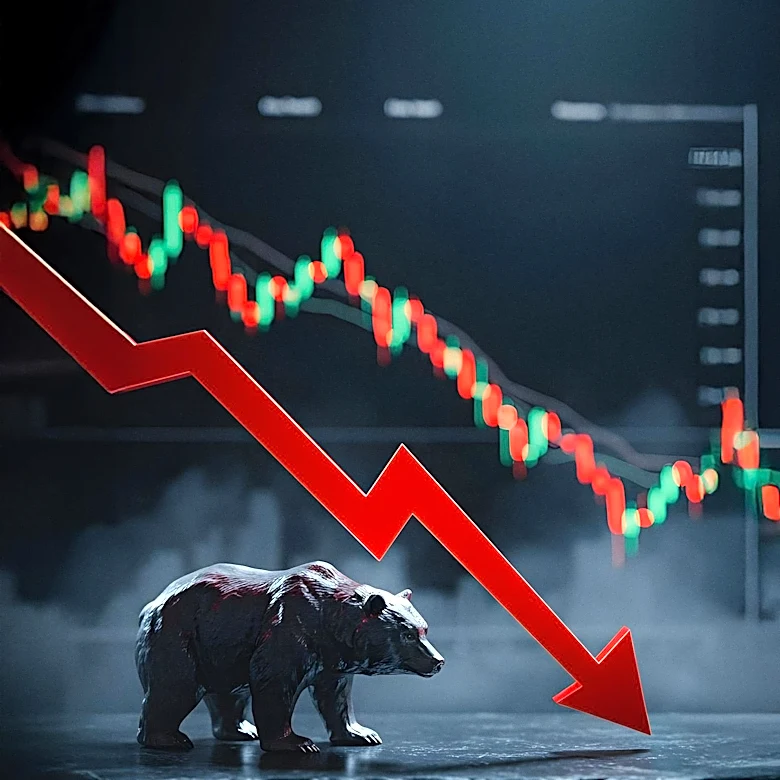
A significant sell-off in artificial intelligence (AI) related stocks is stirring concerns about a potential global economic recession. While the S&P 500 is down 4% from its recent peak and the Nasdaq is down 10%, the ferocity of the sell-off in some
Big Tech and AI-centric sectors suggests more than just a reaction to earnings reports. The AI boom has been a major factor in propping up the global economy, offsetting challenges like the energy crisis, rising inflation, and geopolitical uncertainty. Adam Slater at Oxford Economics estimates that AI-related effects boosted GDP growth across six advanced economies by an average of 0.2 percentage points in 2025-2026, with about a third of the U.S.'s 2.4% growth attributed to AI. The surge in AI-fueled stock prices has also led to record-high U.S. household net wealth, supporting consumer spending. However, a prolonged market downturn could completely evaporate this positive wealth effect, especially given that global growth risks for next year were already skewed to the downside.
Why It's Important?
The potential for a significant downturn in AI-related equities carries substantial implications for the U.S. economy and global markets. The positive 'wealth effects' generated by high stock prices, particularly from the AI boom, have been crucial in sustaining U.S. consumer spending, which is a primary driver of economic growth. Economists at Goldman Sachs estimate this AI boost contributed 0.4 percentage points to U.S. consumer spending growth, or 0.25% of GDP, over the past year. A reversal of this trend, leading to a 'meaningful' negative wealth effect, could severely impact consumer confidence and spending, especially among high-income earners who hold the bulk of equity ownership. This could exacerbate existing global economic weaknesses, including weak domestic demand in China, shaky economic outlooks in Europe, high energy prices, and rising borrowing costs, increasing the risk of advanced economies, including the U.S., entering a recession.
What's Next?
The immediate future will reveal whether the current AI stock sell-off is a temporary market correction or the beginning of a more sustained downturn. If the discomfort among investors escalates into a broader market rout, global growth could be severely impacted. The ongoing infrastructure build-out for AI and the AI revolution itself are still in their early stages, making a complete bust or market meltdown unlikely, but the market narrative and sentiment are clearly shifting. Companies like Meta and Amazon are facing scrutiny for their significant AI spending commitments, and investor reactions to their strategies will be closely watched. The trajectory of consumer sentiment, particularly in the U.S., will be a key indicator, as a prolonged decline in stock prices could further dampen confidence and spending, potentially pushing the economy towards a recession.
Beyond the Headlines
The current situation highlights the intricate link between technological innovation, market speculation, and broader economic stability. The AI boom, while driving significant economic growth and wealth creation, has also concentrated wealth and consumer spending at the top of the income spectrum. This concentration means that a market correction in AI-related assets could disproportionately affect the spending power of a crucial segment of the economy. Furthermore, the reliance on AI-fueled growth to offset other economic headwinds underscores a potential vulnerability: if the AI sector experiences a significant slowdown, the underlying weaknesses in the global economy could become more pronounced. This scenario raises questions about the sustainability of growth models heavily dependent on specific technological booms and the need for diversified economic drivers to mitigate recession risks.