





What's Happening?
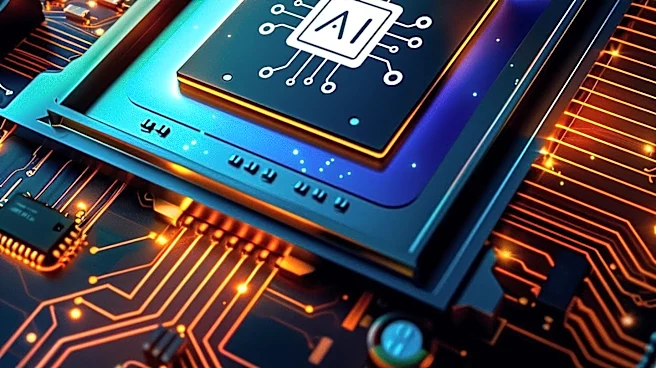
The market for low-power edge AI accelerators is projected to grow from $269.0 million in 2026 to $868.0 million in 2032, exhibiting a Compound Annual Growth Rate (CAGR) of 21.6%. This market encompasses dedicated digital inference chips and accelerator-only
modules with typical operating power up to 10 watts. These products range from sub-milliwatt neural decision processors for continuous sensing to multi-TOPS accelerators used in video analytics and compact generative models. The growth is driven by the increasing demand for local generative AI workloads, which require accelerators with enhanced memory capacity and support for low-precision neural networks. Key players in this market include Syntiant, Hailo (now part of Microchip Technology), Google Coral, DEEPX, and EdgeCortix, all offering specialized solutions for various embedded applications. The Asia Pacific region is identified as the largest regional market, reflecting its concentration in electronics design, equipment manufacturing, and component procurement.
Why It's Important?
This significant growth in the low-power edge AI accelerators market indicates a crucial shift in how AI processing is being deployed, moving intelligence closer to the data source. This trend is vital for U.S. industries, particularly in consumer electronics, industrial automation, and security, as it enables real-time machine vision, always-on intelligence in battery-powered devices, and reduced reliance on cloud-based inference. For businesses, this means lower latency, enhanced data privacy, and more efficient operation of AI-powered devices. Companies that adopt these accelerators can develop more sophisticated and responsive products, gaining a competitive edge. The expansion of local generative AI capabilities also opens new avenues for AI-assisted interfaces and multimodal interaction without continuous internet connectivity, impacting sectors from smart homes to advanced manufacturing. The market's expansion also highlights the increasing importance of specialized hardware in optimizing AI performance and energy efficiency.
What's Next?
Looking ahead, the market is expected to see continued innovation in accelerator design, with a focus on supporting more complex AI models, including local language and vision-language models, within power-constrained devices. Manufacturers will likely further develop modular acceleration solutions, such as M.2 accelerators and AI HATs, to simplify integration into existing embedded systems and shorten product development cycles. This will make AI capabilities more accessible to a broader range of equipment developers, including specialist integrators. The competition among accelerator suppliers will intensify, with differentiation based on physical dimensions, thermal performance, operating system compatibility, and the provision of reliable deployment utilities. Furthermore, the segment of accelerators operating above 1W to 5W is projected to reach $501.40 million by 2032, indicating a strong demand for solutions that balance neural network throughput with manageable cooling requirements for smart cameras and compact embedded systems.
Beyond the Headlines
The proliferation of low-power edge AI accelerators has deeper implications beyond immediate market growth. Ethically, by enabling more processing to occur locally, these accelerators can enhance data privacy and security, as sensitive information may not need to be transmitted to the cloud for analysis. This shift could also lead to a re-evaluation of cloud computing strategies, with a greater emphasis on hybrid models where edge devices handle immediate, critical tasks. Environmentally, the energy efficiency of these accelerators could contribute to reducing the overall carbon footprint of AI operations, especially as AI becomes more pervasive. Culturally, the ability to embed advanced AI capabilities into everyday devices without constant connectivity could fundamentally change human-technology interaction, fostering more seamless and intuitive experiences. This technological evolution also poses legal questions regarding liability and accountability for decisions made by autonomous edge AI systems, necessitating new regulatory frameworks.