
What's Happening?
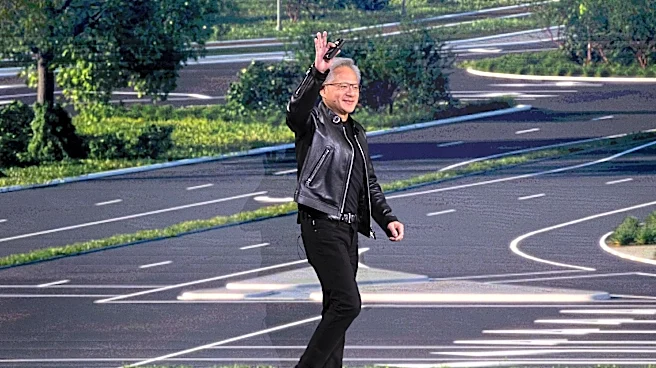
Jensen Huang, CEO of Nvidia, has resigned after 33 years, a departure that Ben Thompson of Stratechery attributes to a business model that became non-compliant with U.S. regulations. While initial reports
cited personal conduct, including alleged affairs with a Singapore-based cloud executive suspected of being a Chinese spy and two employees, Thompson argues the core issue was Nvidia's failure to adapt to new U.S. chip controls. Nvidia, lacking a significant presence in Washington, D.C., reportedly took a minimal compliance approach to the Biden administration's 2022 chip regulations, such as shipping a modified A800 chip to China. This approach extended to overseeing Singaporean entities believed to be fronts for chip diversion to China. Former Treasury Secretary Scott Bessent reportedly pressured Nvidia's board to address these compliance failures, likening the situation to a bank's regulatory obligations. The board subsequently accepted Huang's resignation, appointed an interim CEO, and established a National Security and Export Control Oversight Committee.
Why It's Important?
Huang's resignation and the underlying compliance issues highlight a significant shift in how the U.S. government views and regulates technology companies, particularly those involved in advanced sectors like AI. The analogy to bank regulation, where ignorance is no defense for compliance failures, signals a new era for chipmakers. This development could force other U.S. technology companies with global operations to re-evaluate their compliance strategies, especially concerning exports to countries deemed strategic competitors. The market's reaction, with Nvidia's stock falling over 40% since its October record, underscores the financial implications of such regulatory scrutiny. The weakening of Nvidia's 'moats'—its software platform CUDA, networking and systems, and supply chain relationships—suggests that even dominant tech companies are vulnerable to geopolitical shifts and regulatory changes, impacting their long-term competitive advantage and market valuation.
What's Next?
Nvidia's board has appointed Kress as interim CEO and initiated a search for a permanent replacement, considering both internal and external candidates. The newly formed National Security and Export Control Oversight Committee, to which Nvidia's existing national security and global trade compliance teams now report, indicates a significant restructuring of the company's approach to regulatory adherence. The company's fourth-quarter outlook assumes no data-center compute revenue from China, reflecting the immediate impact of the compliance crackdown. This shift will likely lead to increased scrutiny of Nvidia's supply chain and customer relationships, particularly in regions subject to U.S. export controls. Other U.S. technology companies operating internationally may face similar pressures to enhance their compliance frameworks and engage more proactively with government bodies to avoid comparable disruptions.
Beyond the Headlines
The deeper implication of Huang's departure is the potential demise of the 'independent American technology company' model, which prioritized innovation and global market access over strict geopolitical alignment. Thompson's observation that the AI policy has effectively repealed the bargain for chipmakers—where scale and low friction were worth the risk of ignorance regarding end-users—suggests a fundamental redefinition of corporate responsibility in the tech sector. The shift from a founder-centric, 'exoskeleton' organizational structure, as described by Thompson, to a more regulated, compliance-driven model could stifle the audacious bets and rapid innovation that characterized Nvidia under Huang. This development raises questions about the future of U.S. tech leadership if companies are increasingly constrained by national security concerns, potentially leading to a more fragmented global technology landscape and altering the competitive dynamics of the AI industry.