





What's Happening?
Artificial intelligence is being increasingly integrated into agriculture, particularly for continuous monitoring of livestock health and behavior. According to Alex Thomasson, a professor and director of the Agricultural Autonomy Institute at Mississippi
State University, AI systems can observe animals 24 hours a day, detecting diseases early, identifying animal stress, and even recognizing reproduction events. This level of continuous observation was previously unattainable by humans. Beyond livestock, AI is also improving efficiency in other agricultural sectors, such as poultry processing, where cameras and image processing models can identify issues like misshapen wings or bruising. The development of reliable agricultural AI, however, is contingent on high-quality, scientifically credible data, robust digital infrastructure like broadband connectivity, global positioning systems, and large-scale computing systems. Thomasson emphasizes that AI systems in agriculture must be safe, reliable, and economically practical to be widely adopted.
Why It's Important?
The application of AI in livestock monitoring and agricultural processes holds significant importance for the U.S. agricultural industry. By enabling continuous, 24/7 monitoring, AI can lead to earlier detection of health issues in animals, potentially reducing disease spread and improving animal welfare. This proactive approach can also minimize economic losses for farmers due to illness or reproductive failures. Furthermore, the enhanced efficiency in areas like poultry processing, as noted by Andres Ferreyra, a data asset manager with Syngenta, can lead to higher quality products and reduced waste, benefiting both producers and consumers. The reliance on high-quality data, digital infrastructure, and robust computing systems for effective AI implementation highlights the need for continued investment in rural broadband and technological advancements to ensure equitable access and benefits across the agricultural sector. The economic practicality and reliability of these AI systems are crucial for their widespread adoption and for farmers to see a tangible return on investment.
What's Next?
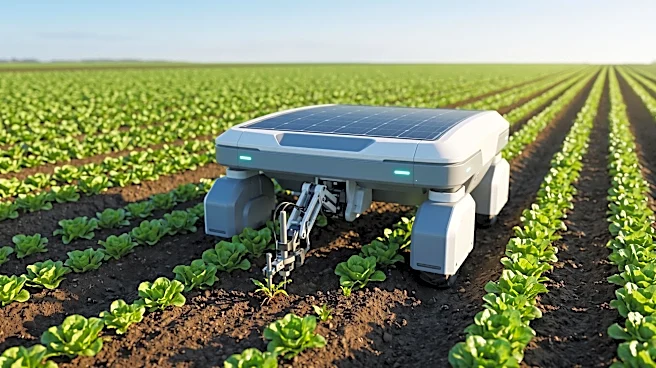
The future of AI in agriculture will likely see continued advancements in data collection and analysis, leading to more sophisticated monitoring and predictive capabilities. As Thomasson points out, the development of AI for plant-level detection and targeted inputs is already showing positive results, which can then integrate with autonomous equipment for field operations. This suggests a move towards more precise and efficient farming practices. However, several challenges need to be addressed for broader implementation. These include ensuring cybersecurity, developing a skilled agricultural workforce capable of operating and maintaining AI systems, and establishing benchmark datasets for validation and trust. The agricultural industry will also need to seriously consider the expectations of what AI can and cannot do, as highlighted by Ferreyra. Policy will play a crucial role in influencing infrastructure standards, competition, workforce preparation, and building trust in AI systems, aiming to maximize benefits while managing potential problems.
Beyond the Headlines
The integration of AI into agriculture, particularly in livestock monitoring, raises deeper implications beyond immediate efficiency gains. Ethically, the continuous surveillance of animals could lead to discussions about animal privacy and the potential for over-medicalization, though the primary goal is improved welfare. Legally, data ownership and privacy in agricultural operations, especially with the consolidation of data through initiatives like the USDA's 'One Farmer, One File,' become critical. As noted in a LinkedIn article, the question of who controls the formalized record of agricultural operations—whether it's government institutions, private technology providers, or the producers themselves—will shape agricultural sovereignty. This shift in control over data could redefine what counts as collateral, how quickly eligibility for aid becomes access, and how risk is insured, fundamentally altering the power dynamics within the agricultural sector. The need for human oversight and workforce development also underscores the importance of ensuring that technology serves to empower, rather than displace, agricultural workers.