





What's Happening?
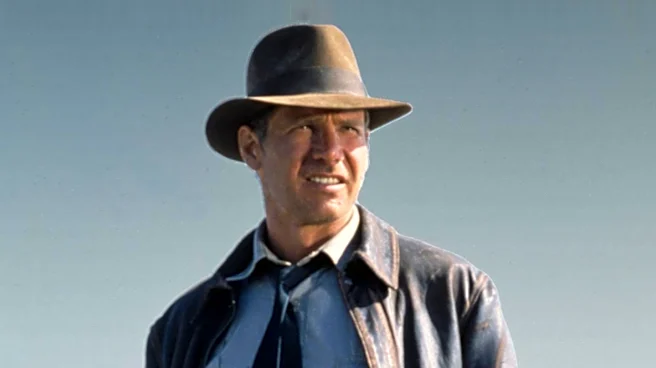
Before achieving widespread fame as Han Solo, Harrison Ford was a struggling actor earning $150 a week. During this period, he taught himself carpentry and secured a job that would later become a notable part of Hollywood lore. In 1970, Ford built a $100,000
recording studio. Seven years later, his life significantly changed with his role in 'Star Wars.' This historical account sheds light on Ford's journey and the diverse skills he developed prior to his breakthrough in the film industry, illustrating a period of his life where he balanced acting aspirations with a practical trade.
Why It's Important?
This story is important as it provides insight into the unconventional path of a major Hollywood star, highlighting the perseverance and resourcefulness often required in the entertainment industry. It challenges the perception that success is always immediate or linear, demonstrating that even iconic figures like Harrison Ford faced financial struggles and pursued alternative careers. For aspiring actors and artists, it serves as an inspiring example of dedication and the value of developing diverse skills. Furthermore, it adds a unique dimension to Ford's public persona, showcasing his hands-on abilities and work ethic beyond his acting talents, which can resonate with a broader audience interested in personal success stories.
What's Next?
While this information pertains to Harrison Ford's past, it continues to shape public perception and interest in his career. The narrative of his carpentry background often resurfaces in interviews and retrospectives, contributing to his enduring appeal. For the entertainment industry, such stories reinforce the idea that talent can emerge from unexpected places and that a diverse skill set can be an asset. Future biographical works or documentaries about Ford will likely continue to feature this period of his life, further cementing its place in his personal and professional history. The anecdote serves as a timeless reminder of the journey behind the celebrity.
Beyond the Headlines
Beyond the immediate facts of Harrison Ford's carpentry work, this narrative touches upon broader themes of vocational training, the gig economy before its modern definition, and the pursuit of passion despite financial constraints. It highlights how practical skills can provide stability while one pursues artistic dreams. In a society often focused on immediate gratification and specialized careers, Ford's story offers a compelling counter-narrative about the value of diverse experiences and the dignity of manual labor. It also subtly critiques the often-unstable nature of early career paths in creative fields, underscoring the need for resilience and adaptability. This aspect of his life adds depth to his public image, portraying him not just as a movie star but as a skilled craftsman.