
What's Happening?
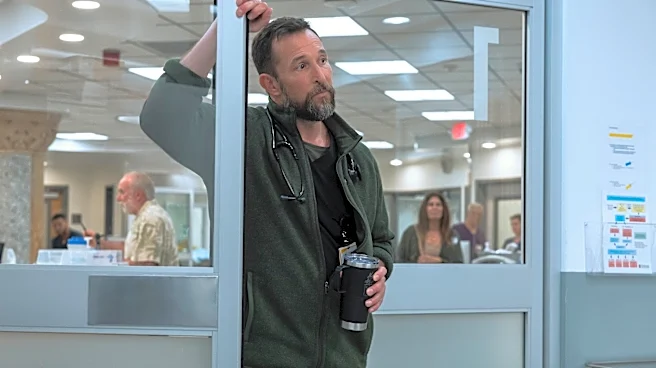
A California appeals court has ruled that a lawsuit alleging HBO Max series 'The Pitt' is an unauthorized reboot of 'ER' can move forward against Warner Bros. Television. The lawsuit was filed by Sherri
Crichton, the widow of 'ER' creator Michael Crichton, who claims the studio developed 'The Pitt' after she refused to approve a proposed reboot of her late husband’s series. The court's three-judge panel unanimously found similarities between the two medical dramas, including their emergency room settings, fast-paced storytelling, medical terminology, and the challenges faced by hospital workers. However, the court dismissed actor Noah Wyle, who starred in both shows, along with producers John Wells and R. Scott Gemmill, from the case, citing a lack of evidence that they knew about the specific contract terms they were accused of interfering with.
Why It's Important?
This ruling is significant for intellectual property rights within the entertainment industry, particularly concerning legacy content and contractual agreements. It underscores the importance of obtaining proper permissions for adaptations or reboots, especially when original creators or their estates have specific clauses in their contracts. For Warner Bros. Television, the continuation of this lawsuit could have substantial financial and reputational implications, potentially leading to damages or injunctions if found liable. The case highlights the ongoing tension between studios seeking to leverage popular existing intellectual property and the rights of creators to control their works. The dismissal of individual actors and producers from the lawsuit also clarifies the scope of liability in such disputes, focusing the legal battle on the corporate entity responsible for production and distribution.
What's Next?
The lawsuit against Warner Bros. Television will now proceed, with the studio maintaining that 'The Pitt' is an entirely original series and that the claims are without merit. The appeals court's decision does not determine whether 'The Pitt' is indeed an unauthorized reboot of 'ER,' but rather allows the legal process to continue. Warner Bros. Television has stated its intention to defend its position as the case moves forward. Meanwhile, 'The Pitt' is already preparing for its third season, which is expected to premiere in January 2027. The outcome of this lawsuit could influence how studios approach reboots and adaptations of established franchises in the future, potentially leading to more stringent legal reviews and negotiations with creators' estates.
Beyond the Headlines
Beyond the immediate legal implications, this case touches upon the broader cultural value and legacy of iconic television series like 'ER.' It raises questions about what constitutes an 'original' work versus an 'unauthorized reboot' in an era where studios frequently revisit popular past successes. The lawsuit could set a precedent for how intellectual property rights are interpreted in the context of evolving media landscapes and the increasing demand for recognizable content. It also highlights the ethical considerations involved in honoring the creative legacy of deceased artists and ensuring their contractual agreements are upheld. The legal battle may prompt a re-evaluation of standard industry practices regarding the development of new projects that bear resemblances to existing, protected works.