





What's Happening?
A top-floor co-op in the Musician’s Building at 50 West 67th Street on the Upper West Side of New York City is on the market for $3.5 million. This building, constructed in 1917, was originally designed as an artists’ colony with soundproof walls specifically
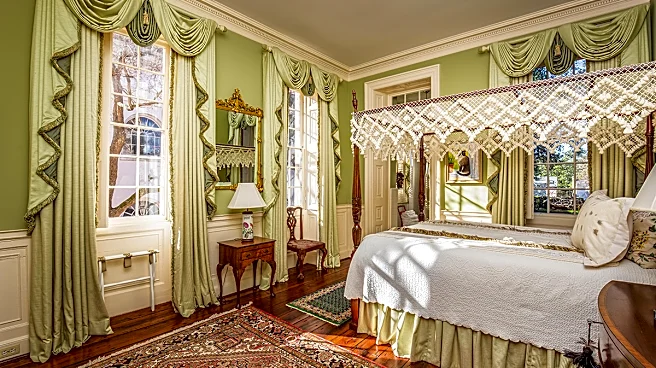
for musicians and artists. The residence, recognizable by its Gothic entrance and ornate roof details, offers a blend of pre-war charm and 21st-century standards. The palatial duplex features graciously sized rooms, high ceilings, and extraordinary architectural details. Key features include a vaulted entrance gallery, a living room with 10-foot ceilings, tall casement windows, elaborate crown moldings, and two working wood-burning fireplaces. The home also boasts intricate ceiling and doorway details, built-in cabinetry, custom cove lighting, four exposures, and central air conditioning. A stylish eat-in kitchen with custom cabinetry and top-performing appliances, including a vented Viking range and a washer/dryer, is also part of the offering. The co-op is pet-friendly, allows pieds-a-terre, and includes two storage cages.
Why It's Important?
This listing highlights the enduring appeal and significant value of historic properties in prime New York City locations, particularly those with unique cultural legacies. The Musician’s Building's original design as an artists' colony adds a distinctive historical layer, attracting buyers who appreciate both architectural heritage and a connection to the city's artistic past. The high asking price of $3.5 million for a co-op in this building reflects the premium placed on spacious pre-war homes in desirable neighborhoods like the Upper West Side, where real estate remains a robust investment. The property's features, such as soundproof walls and generous proportions, cater to a niche market seeking both luxury and functionality. Furthermore, the co-op's recent deal to sell air rights to a developer, which has halved monthly maintenance fees, demonstrates innovative financial strategies employed by co-op boards to enhance property value and attractiveness for potential buyers, impacting the broader real estate market by showcasing alternative funding models for building maintenance and capital reserves.
What's Next?
The property is being marketed by Brown Harris Stevens, with Jessica Cohen and Andrew Brinster handling the listing. The unique historical context of the Musician’s Building, combined with its luxurious modern amenities and reduced maintenance fees, is expected to attract considerable interest from high-net-worth individuals seeking a distinctive residence in New York City. Potential buyers will likely be drawn to the blend of artistic heritage and contemporary comfort. The sale of this co-op could further solidify the trend of preserving and modernizing historic artists' residences, potentially influencing other co-op boards in similar buildings to explore creative financial solutions like selling air rights to enhance their properties. The successful sale will also provide a benchmark for the value of historically significant, luxury co-ops in the Upper West Side market, potentially impacting pricing strategies for future listings in the area.
Beyond the Headlines
The sale of this co-op in a former artists' colony touches upon the evolving nature of urban living and the commodification of artistic heritage. While the building was originally intended to foster a community of musicians and artists, its current market value positions it as a luxury residence, accessible primarily to the affluent. This transformation from a creative hub to an exclusive residential property reflects broader gentrification trends in New York City, where historic spaces are often repurposed for high-end living. The concept of soundproof walls, once a practical necessity for artists, now serves as a luxury amenity, highlighting how original design intentions can be reinterpreted over time. This shift raises questions about the preservation of artistic communities within increasingly expensive urban environments and the balance between historical legacy and contemporary market demands. The financial strategy of selling air rights also points to the complex economic pressures and opportunities faced by co-op buildings in maintaining their infrastructure and appeal.