




What's Happening?
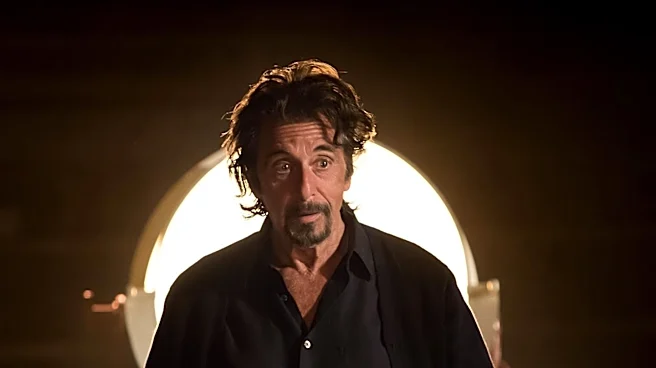
Al Pacino, during conversations with fellow actor Colin Farrell, disclosed that Walter Huston's portrayal of the devil in the 1941 film 'The Devil and Daniel Webster' significantly influenced his own iconic performance as John Milton in the 1997 movie
'The Devil's Advocate.' Pacino emphasized the importance of finding nuanced aspects within a character, regardless of the project's scale, advising actors to pursue roles they genuinely enjoy. He revisited several cinematic depictions of the devil, including Daryl Van Horne from 'The Witches of Eastwick' and Robert De Niro's character in 'Angel Heart,' but found Huston's performance particularly inspiring. Pacino admired Huston's ability to convey the devil's power without overt theatrics, which encouraged him to find his unique voice for the role, aiming for a more human and relatable interpretation.
Why It's Important?
This insight from Al Pacino underscores the profound impact of cinematic history and the continuous lineage of artistic inspiration within the acting profession. For the U.S. film industry, it highlights how classic performances continue to shape contemporary acting, demonstrating that even seasoned actors draw from the past to enrich their roles. Pacino's philosophy—prioritizing artistic fulfillment over mere financial gain and seeking sympathetic qualities in characters—offers a valuable lesson for aspiring actors and filmmakers. It emphasizes that depth and nuance can be found even in commercial projects. This approach contributes to the creation of memorable and complex characters, which in turn elevates the quality of American cinema and its cultural impact, ensuring that iconic roles are not just replicated but reinterpreted with fresh perspectives.
What's Next?
Pacino's revelation is likely to spark renewed interest in Walter Huston's performance in 'The Devil and Daniel Webster,' potentially leading to its re-evaluation by film critics and audiences. This kind of intergenerational artistic dialogue can inspire new academic studies on acting methodologies and the evolution of character portrayal in cinema. For actors, it reinforces the value of studying film history and drawing inspiration from diverse sources. The ongoing exploration of religious and artistic themes in cinema, particularly through universally recognized characters like the devil, will continue to evolve, with each generation of actors leaving their unique mark. This continuous cycle of inspiration ensures the richness and depth of storytelling in the U.S. film industry.
Beyond the Headlines
Beyond the immediate influence on a specific role, Pacino's reflection touches upon the broader ethical and philosophical dimensions of portraying evil. By seeking a 'human and relatable angle' for the devil, Pacino delves into the complexities of morality and the nature of temptation, suggesting that evil is not always overtly theatrical but can manifest in subtle, persuasive ways. This approach challenges audiences to consider the more insidious forms of malevolence and the internal struggles that define human nature. The idea that an actor can find 'sympathetic' traits in a villainous character also speaks to the power of empathy in storytelling, encouraging a deeper understanding of motivations rather than simplistic condemnation. This artistic choice enriches the cultural discourse around good and evil, making the portrayal more thought-provoking and resonant.