

What's Happening?
Australia is aiming to establish a green iron export industry to support global emissions reductions and offset declines in traditional fossil fuel exports. A briefing note highlights that achieving this goal will require significant investment, estimated
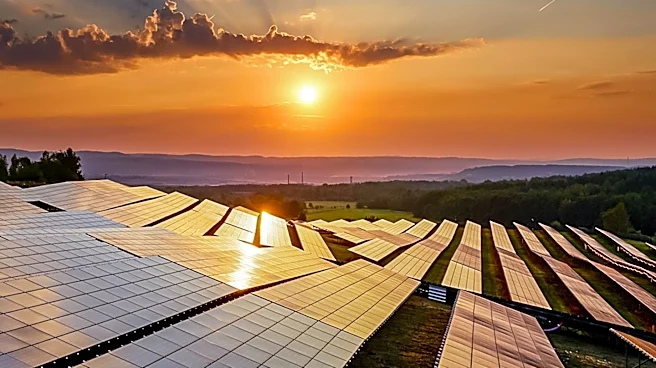
at AU$170 billion annually over the next 14 years. This investment is necessary to build the infrastructure for green iron production, which includes ironmaking furnaces, electrolysers, and renewable energy sources like solar and wind. Despite the potential for AU$96 billion in annual revenue by 2040, green iron is not yet cost-competitive due to its energy-intensive production process.
Why It's Important?
The development of a green iron industry in Australia is crucial as the global steel industry moves towards decarbonization. This shift presents an opportunity for Australia to replace its declining coal and gas exports with green iron, potentially securing a significant share of the future low-carbon steel market. However, the high capital investment required poses a challenge, and without sufficient policy support to establish a green premium, attracting the necessary capital may be difficult. The success of this initiative could have significant implications for Australia's economy and its role in global emissions reduction efforts.
What's Next?
For Australia to realize its green iron ambitions, it will need to implement policies that provide investment certainty and establish a market for green iron. This could involve adapting successful renewable energy models, such as renewable portfolio standards and feed-in tariffs, to the green iron sector. Additionally, increasing renewable energy capacity, particularly in regions like South Australia, will be essential to power green iron production facilities. The government's commitment to supporting this industry will be critical in attracting the necessary investment and ensuring the project's viability.