


What's Happening?
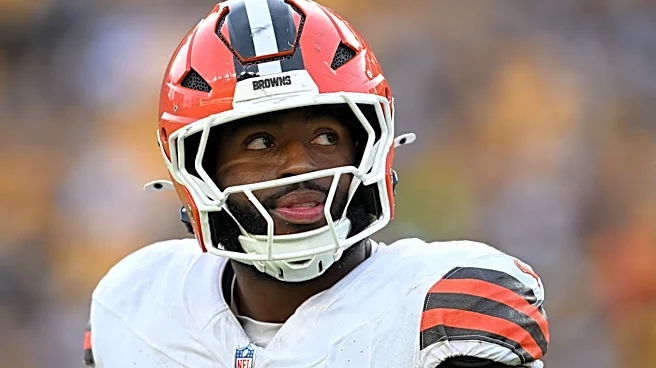
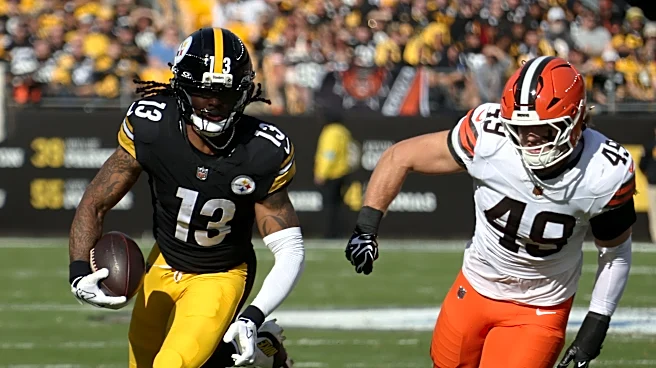
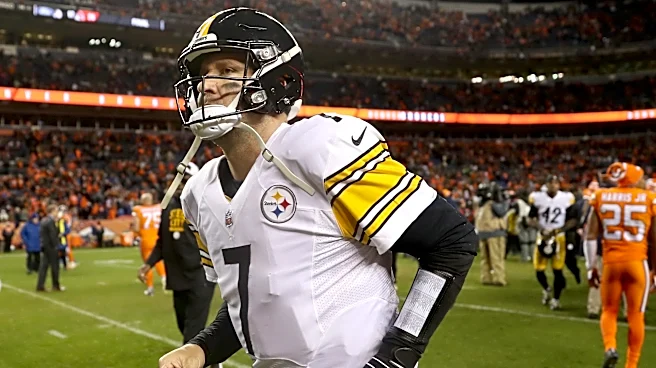
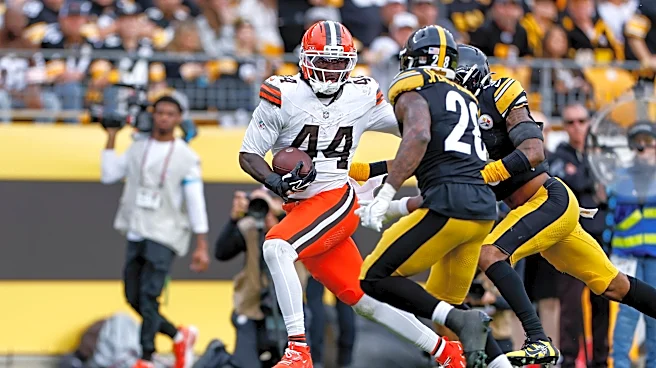
During a recent game between the Pittsburgh Steelers and the Cleveland Browns, former Steelers linebacker James Harrison reportedly attempted to confront Browns players during pregame activities. According to former Steelers quarterback Ben Roethlisberger,
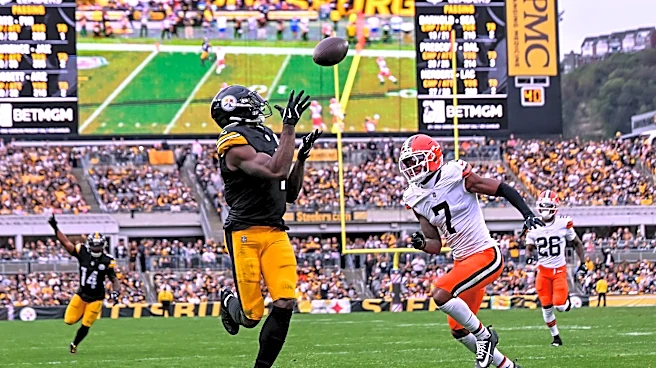
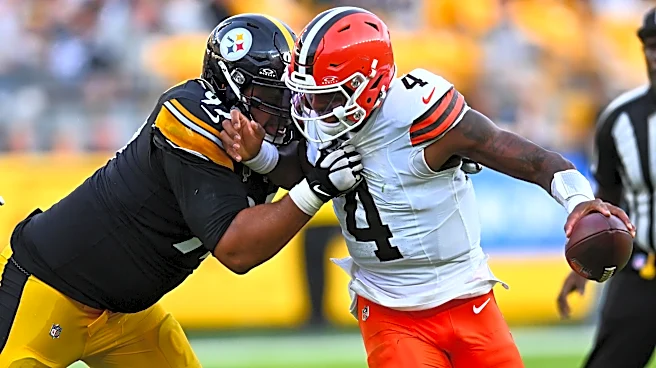
Harrison became agitated by the Browns' behavior on the field, specifically their players crossing midfield and engaging in verbal exchanges. Roethlisberger recounted that he was informed of Harrison's confrontational stance and intervened to calm him down. Harrison, known for his intense playing style, expressed his belief that the Browns were showing disrespect by entering what he considered Pittsburgh's territory. This incident occurred despite Harrison not being an active player, highlighting his continued passion for the Steelers-Browns rivalry. The Steelers ultimately won the game 27-6, with a strong performance that included 200 rushing yards and eight sacks, holding Cleveland to six points.
Why It's Important?
This event underscores the deep-seated rivalry between the Pittsburgh Steelers and the Cleveland Browns, demonstrating how intensely former players remain invested in their teams and the historical animosity. For fans, it provides an entertaining glimpse into the competitive spirit that extends beyond active rosters. From a broader perspective, such incidents, even if minor, can fuel narratives around sportsmanship and the psychological warfare that often accompanies high-stakes athletic competitions. While Harrison's actions did not escalate into a physical altercation, they serve as a reminder of the emotional intensity that can permeate professional sports, influencing team dynamics and fan engagement. The incident also highlights the role of veteran players, even in retirement, as cultural touchstones for their former organizations.
Beyond the Headlines
The incident involving James Harrison and the Cleveland Browns players goes beyond a simple pregame scuffle; it illustrates the enduring legacy of rivalries in professional sports and the deep personal connection many athletes maintain with their former teams. Harrison's reaction, even as a retired player, speaks to a culture where defending team honor and territory is paramount. This kind of emotional investment, while sometimes leading to confrontational moments, also contributes to the rich narrative and fan loyalty that define sports. It suggests that for some athletes, the competitive fire and sense of belonging to a team never truly extinguish, even after their playing careers conclude. Such events, though not directly impacting game outcomes, contribute to the folklore and intensity that make sports rivalries compelling.