
What's Happening?
Applied Intuition, Inc., a Silicon Valley company founded in 2017, has achieved a valuation of $15 billion. The company specializes in creating digital infrastructure to integrate artificial intelligence
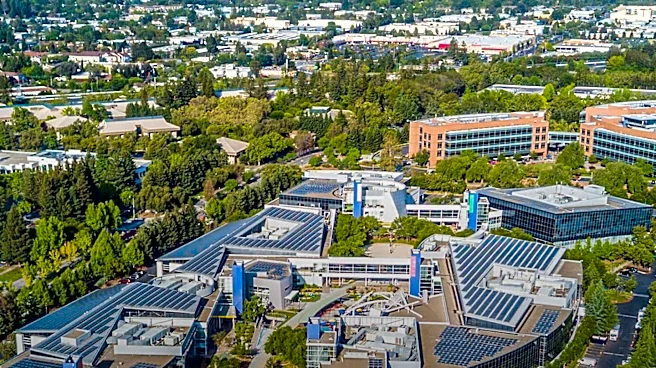
into various moving machines across multiple industries. These industries include automotive, defense, trucking, construction, mining, and agriculture. Applied Intuition's services are categorized into three core areas: tools and infrastructure, operating systems, and autonomy. The company is headquartered in Sunnyvale, California, and maintains additional offices in Washington, D.C., San Diego, Ft. Walton Beach, Florida, and Ann Arbor, Michigan, as well as international locations. Eighteen of the top 20 global automakers, along with the United States military and its allies, utilize Applied Intuition's solutions. The company is actively seeking a Product Counsel Lead to join its legal team, a strategic role focused on providing legal guidance for product, engineering, and marketing initiatives, covering areas such as integrations, privacy, copyright, accessibility, and emerging technologies.
Why It's Important?
Applied Intuition's significant valuation and broad industry reach underscore the growing importance of AI and autonomous systems in critical sectors of the U.S. economy and national security. Its work with major automakers indicates a strong influence on the future of transportation, potentially accelerating the development and deployment of self-driving vehicles. The company's engagement with the U.S. military and its allies highlights its role in advancing defense capabilities through AI, which could impact national security strategies and technological superiority. Furthermore, its expansion into diverse sectors like construction, mining, and agriculture suggests a widespread transformation of industrial operations, promising increased efficiency and automation. The demand for specialized legal counsel in areas like privacy and emerging technologies also reflects the complex regulatory and ethical challenges inherent in the rapid advancement of AI, emphasizing the need for robust legal frameworks to govern these innovations.
What's Next?
Applied Intuition is actively expanding its legal team, seeking a Product Counsel Lead to navigate the complex legal landscape of AI and autonomy. This indicates a proactive approach to addressing regulatory challenges and ensuring compliance as the company continues to innovate and grow. The new counsel will be instrumental in guiding product development, engineering, and marketing efforts, particularly concerning data protection, intellectual property, and consumer protections. As the company further integrates AI into various industries, it is likely to face evolving legal and ethical considerations, necessitating continuous adaptation of its internal policies and external engagements. Future developments may include increased collaboration with regulatory bodies and industry groups to shape standards for autonomous technologies, as well as potential mergers and acquisitions to expand its technological footprint and market share.
Beyond the Headlines
The rapid growth and substantial valuation of Applied Intuition reflect a broader societal shift towards physical AI and autonomous systems, which carries profound implications beyond immediate economic gains. The company's focus on 'bringing intelligence to every moving machine' suggests a future where human interaction with machinery is fundamentally altered, raising questions about workforce displacement, the nature of labor, and the skills required for future employment. Ethically, the deployment of AI in critical sectors like defense and automotive necessitates rigorous discussions around accountability, decision-making algorithms, and potential biases embedded in AI systems. Legally, the evolving landscape of AI technology will likely push the boundaries of existing intellectual property, privacy, and liability laws, requiring new legislative frameworks and judicial interpretations. Culturally, the increasing reliance on autonomous machines could reshape public trust in technology and influence societal perceptions of safety and control, prompting a re-evaluation of human-machine partnerships.