
What's Happening?
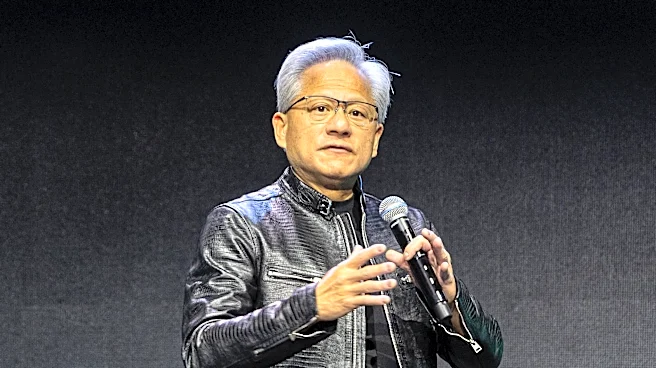
Nvidia's board has initiated an independent probe into its co-founder and CEO, Jensen Huang, following his acknowledgment of an affair. This development comes after reports from The New York Times indicated
that U.S. intelligence officials concluded the woman involved, Alice Huang (also known as Huang Le), was a Chinese executive allegedly funneling information to Beijing. Alice Huang, who is not related to Jensen Huang, developed a close relationship with the Nvidia CEO. Megaspeed, a Singapore-based data center company linked to Alice Huang, is also under scrutiny for potentially directing Nvidia AI chips to China. Jensen Huang issued a message to company employees, apologizing for his infidelity to his wife and family. Secretary of State Marco Rubio declined to comment on the matter, referring to it as an 'internal corporate matter.'
Why It's Important?
This probe carries significant implications for Nvidia, a global leader in AI chip production and one of the world's most valuable companies. The alleged involvement of a Chinese intelligence operative in a relationship with a key U.S. tech executive raises national security concerns, particularly given the ongoing tech dominance race between the U.S. and China. The U.S. currently restricts the export of cutting-edge silicon chips to China, making any potential compromise of Nvidia's technology or insights a critical issue. The situation could impact investor confidence in Nvidia and potentially lead to increased scrutiny of U.S. tech executives' foreign relationships. The fact that President Trump was reportedly briefed on these intelligence findings a year ago but chose not to act also adds a political dimension, especially as AI is expected to be a topic in his upcoming talks with President Xi Jinping.
What's Next?
Nvidia's independent probe will examine all available information to determine if national security or Nvidia's secrets were compromised. While the board currently has no reason to believe a compromise occurred, the investigation's findings will be crucial. The Chinese government has dismissed the New York Times report as 'groundless speculation.' The outcome of this probe could influence future U.S. policies regarding technology exports and executive oversight in critical industries. It may also lead to further discussions and potential actions from U.S. intelligence agencies regarding foreign influence in the tech sector. The situation could also affect Jensen Huang's leadership position at Nvidia, depending on the findings of the investigation.
Beyond the Headlines
Beyond the immediate corporate and national security implications, this incident highlights the complex and often covert nature of international industrial espionage, particularly in high-stakes sectors like artificial intelligence. It underscores the vulnerability of even top executives to foreign intelligence efforts through personal relationships. The ethical dimensions of executive conduct, especially when intertwined with national security interests, are brought to the forefront. This event could trigger broader discussions within U.S. corporations about enhancing security protocols, conducting more rigorous background checks for executives, and providing training on identifying and mitigating foreign influence attempts. It also sheds light on the delicate balance between fostering international business relationships and safeguarding national technological advantages.