

What's Happening?
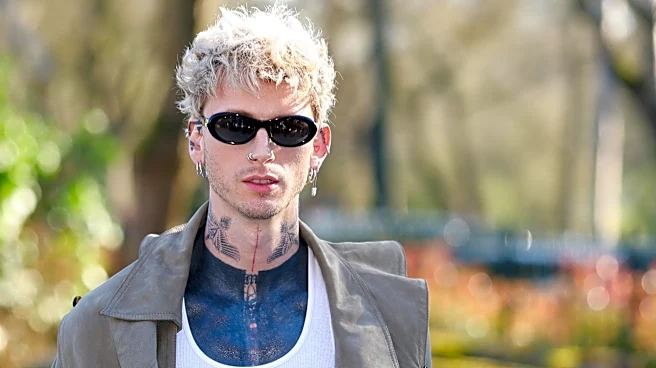
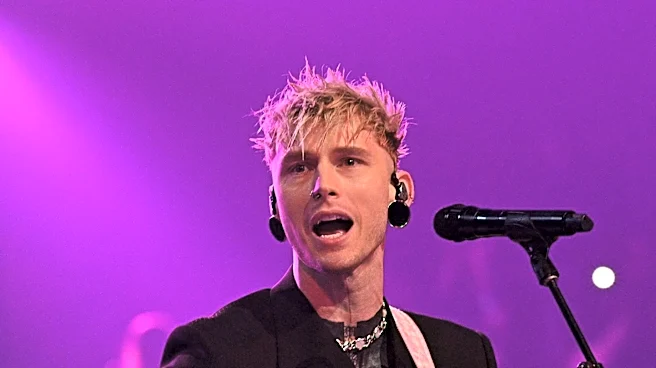
Machine Gun Kelly, the rapper and rocker, has publicly criticized individuals who undergo anesthesia for full-body tattoos, asserting that they 'didn’t earn that ink.' His comments were made in response to a video depicting a man receiving an extensive
tattoo while under anesthesia and wearing a diaper. Machine Gun Kelly expressed his disapproval on X, stating, 'Got put to sleep and wore a diaper for a tattoo, I hope you s**t yourself you f**kin fairy.' This statement has ignited a significant online debate, with many social media users accusing him of hypocrisy and being overly dramatic. Critics pointed to his own use of makeup and nail polish, questioning his authority to label others. The artist's strong stance reflects a traditionalist view within tattoo culture, emphasizing the endurance and pain associated with the tattooing process as integral to earning the 'ink.'
Why It's Important?
This incident highlights a cultural clash within the U.S. tattoo community and broader society regarding authenticity, pain, and personal choice. Machine Gun Kelly's comments, while controversial, tap into a long-standing ethos among some tattoo enthusiasts who view the pain of tattooing as a rite of passage and a testament to commitment. His remarks, however, also expose a generational or philosophical divide, as many argue that advancements in pain management, including anesthesia, should be embraced to make extensive tattooing more accessible and less traumatic. The online backlash he received underscores the evolving perceptions of masculinity and self-expression, particularly for public figures who challenge conventional norms while simultaneously criticizing others for their choices. This debate can influence how tattoo artists and clients approach large-scale projects, potentially leading to more open discussions about pain management options.
What's Next?
The controversy is likely to continue generating discussion across social media platforms and within tattoo communities. Machine Gun Kelly may face ongoing criticism or be pressed to clarify his comments, especially given his own history of challenging traditional norms. This event could also lead to increased awareness and discussion about the use of anesthesia in tattooing, prompting more individuals to consider or debate its ethical and cultural implications. Tattoo artists might see a rise in inquiries about pain management options, or conversely, a reinforcement of the 'traditional' approach to tattooing without medical intervention. The incident serves as a reminder of how celebrity opinions can quickly shape public discourse on niche cultural practices.
Beyond the Headlines
This debate extends beyond the immediate controversy to touch upon deeper societal values concerning resilience, authenticity, and the role of pain in personal achievement. Machine Gun Kelly's perspective, rooted in a 'no pain, no gain' mentality, reflects a certain cultural ideal that values struggle and endurance. However, the counter-arguments highlight a shift towards prioritizing comfort and accessibility, even in activities traditionally associated with discomfort. This tension is not unique to tattooing but is present in various aspects of modern life, from fitness to personal development. The incident also brings to light the complexities of celebrity influence, where personal opinions can be amplified and scrutinized, often leading to broader conversations about cultural norms and individual freedoms. It also subtly touches on the historical context of derogatory slurs, as Machine Gun Kelly himself has spoken about being called such names for his appearance, adding another layer to his seemingly contradictory criticism.