









What's Happening?
Bangladesh has finalized a loan agreement worth $335.78 million (RMB 2.404 billion or Tk 3,592.90 crore) with the Export-Import Bank of China. This financing is designated for the expansion and modernization of Mongla Port, a critical infrastructure project
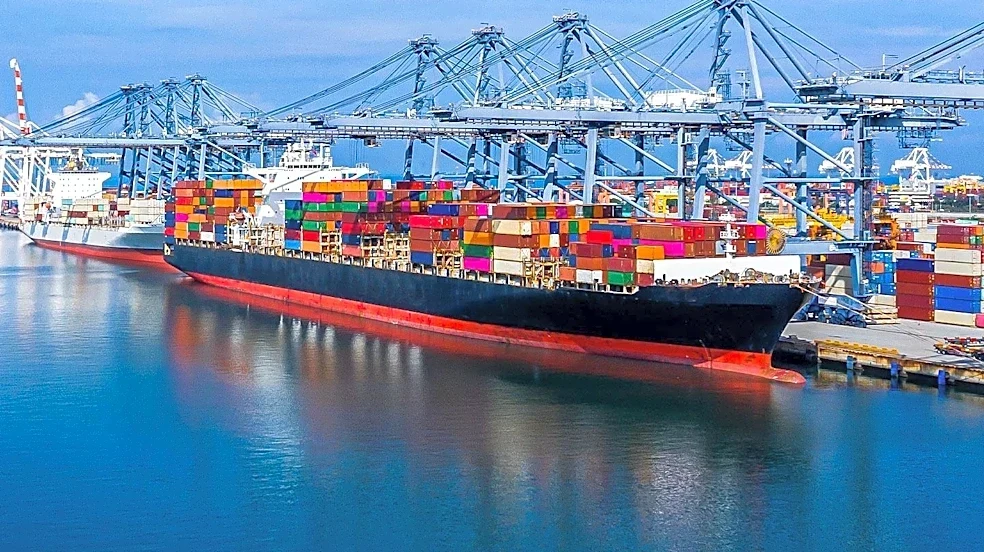
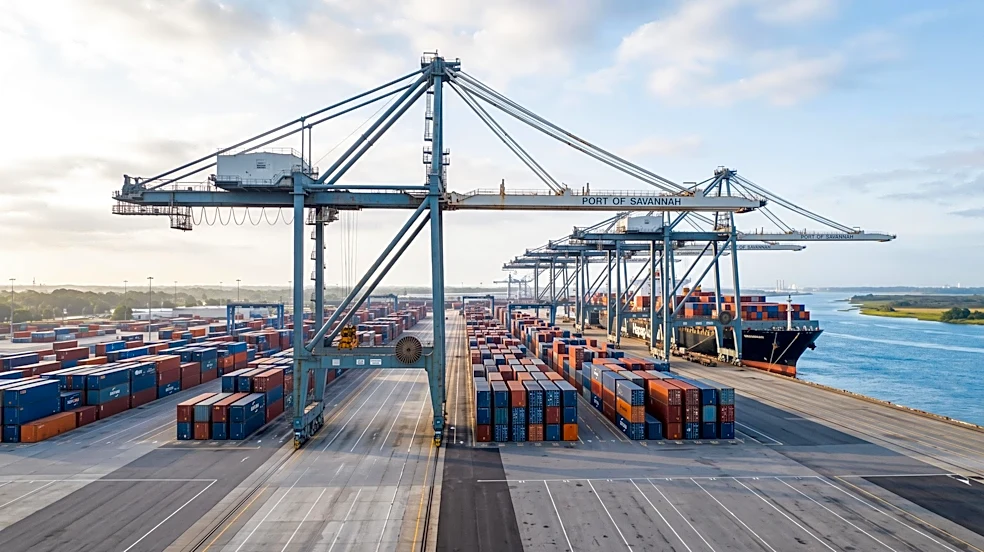
for Bangladesh. The agreement, signed by Alia Meher, joint secretary of the Economic Relations Division (ERD) of the Ministry of Finance, and Fengjun Tian, assistant general manager of China’s EXIM Bank, outlines the construction of two new container terminals, a container yard, a container delivery yard, and a cargo handling yard. The project also includes the acquisition of modern machinery to enhance the port's operational capabilities. The loan comes with concessional financing terms, featuring an interest rate of 2% and a repayment period of 20 years, which includes a five-year grace period. This initiative aims to significantly upgrade Mongla Port, improving its capacity and efficiency to handle increased trade volumes.
Why It's Important?
The modernization of Mongla Port is strategically important for Bangladesh's economic development and regional trade. As the country's second-largest seaport, an upgraded Mongla Port will enhance its capacity to facilitate international trade, reducing logistical bottlenecks and potentially lowering import and export costs. This infrastructure improvement can attract more foreign investment and stimulate economic growth by providing more efficient access to global markets for Bangladeshi goods. For China, this loan signifies its continued engagement in infrastructure development projects within South Asia, aligning with its broader Belt and Road Initiative. Such investments strengthen China's economic ties and influence in the region. The concessional terms of the loan also highlight China's approach to development financing, offering favorable conditions that can be attractive to developing nations seeking to improve their infrastructure. The project's success could serve as a model for future collaborations between China and other developing countries, further solidifying China's role as a key global financier and development partner.
What's Next?
Following the signing of the loan agreement, the Mongla Port Authority will proceed with the implementation phase of the modernization project. This will involve detailed planning, procurement of equipment, and commencement of construction for the new container terminals and associated facilities. The 20-year repayment period, including a five-year grace period, suggests that the financial obligations for Bangladesh will begin after a significant portion of the project is expected to be operational, allowing the port to generate revenue to support repayment. Both Bangladesh and China will likely monitor the project's progress closely, as its successful completion could pave the way for further bilateral cooperation in infrastructure and trade. The enhanced capacity of Mongla Port is expected to gradually increase trade volumes, which will necessitate adjustments in logistics and supply chain management for businesses utilizing the port. The project's impact on regional trade dynamics and Bangladesh's economic indicators will be observed as the modernization efforts advance.
Beyond the Headlines
This loan agreement extends beyond a simple financial transaction, reflecting deeper geopolitical and economic currents. For Bangladesh, modernizing Mongla Port is crucial for diversifying its trade routes and reducing reliance on the more congested Chittagong Port. This strategic move could enhance national resilience against supply chain disruptions and improve overall economic competitiveness. For China, the investment in Mongla Port is part of a broader strategy to expand its maritime trade networks and secure access to key logistical hubs in the Indian Ocean region. This engagement can be viewed within the context of China's Belt and Road Initiative, which aims to create a vast network of infrastructure and trade routes across Asia, Africa, and Europe. The concessional nature of the loan, while beneficial to Bangladesh, also raises questions about long-term debt sustainability and the potential for increased economic dependence on China. The project's success will be a test case for the efficacy and mutual benefits of such large-scale infrastructure financing initiatives, influencing future development partnerships in the region and potentially altering the geopolitical landscape of South Asia.