








What's Happening?
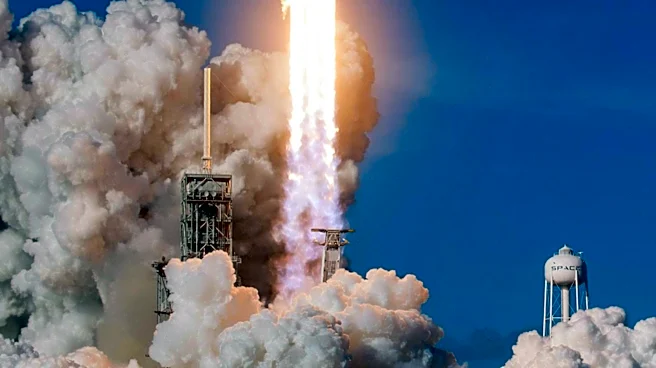
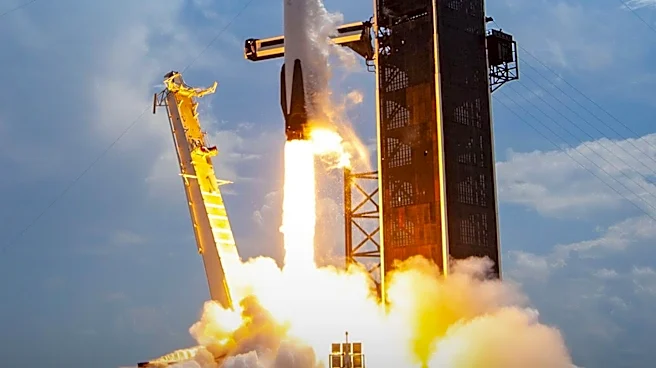
SpaceX is preparing to launch its Falcon 9 rocket for a record-breaking 36th flight, supporting the Starlink 10-42 mission. This mission will add 29 more broadband internet satellites to SpaceX's low Earth orbit constellation, which currently includes
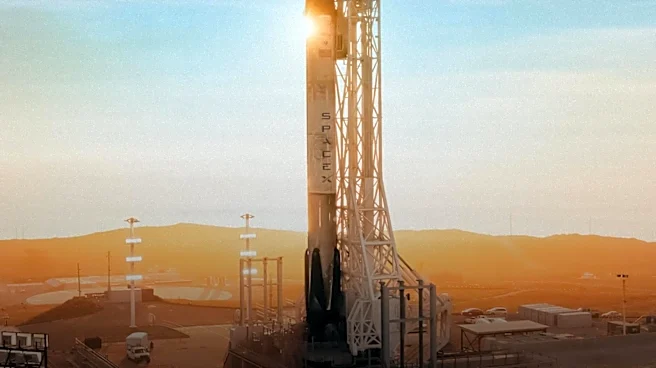
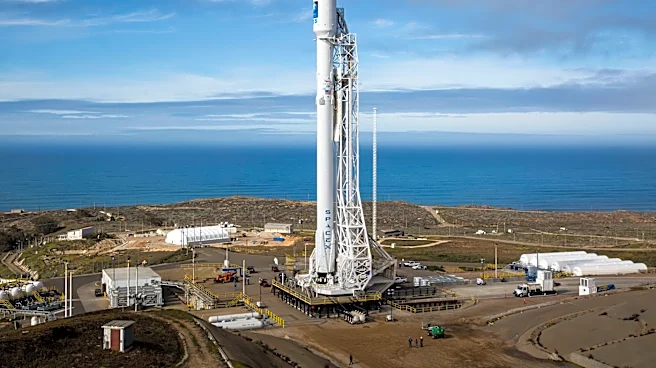
over 10,700 satellites. The launch is scheduled from Space Launch Complex 40 at Cape Canaveral Space Force Station, with a planned liftoff at 5:25 a.m. EDT. The Falcon 9 booster, B1067, has previously supported multiple missions, including NASA's Commercial Resupply Services and Crew missions. The booster is set to land on the drone ship 'A Shortfall of Gravitas' in the Atlantic Ocean post-launch.
Why It's Important?
This launch marks a significant milestone in SpaceX's efforts to expand its Starlink satellite network, which aims to provide global broadband internet coverage. The reuse of the Falcon 9 booster for the 36th time demonstrates SpaceX's advancements in rocket reusability, potentially reducing costs and increasing the frequency of launches. The success of this mission could further solidify SpaceX's position as a leader in the commercial space industry and influence future satellite internet services. Additionally, the mission's success could have implications for global internet accessibility, particularly in remote and underserved areas.
What's Next?
Following the launch, SpaceX will continue to monitor the deployment and operation of the new Starlink satellites. The company plans to further expand its satellite constellation, with additional launches scheduled in the coming months. The success of this mission may prompt increased interest and investment in satellite internet technology, potentially leading to collaborations with governments and private entities to enhance global connectivity. SpaceX's continued focus on reusability and cost reduction could also influence the strategies of other aerospace companies.