






What's Happening?
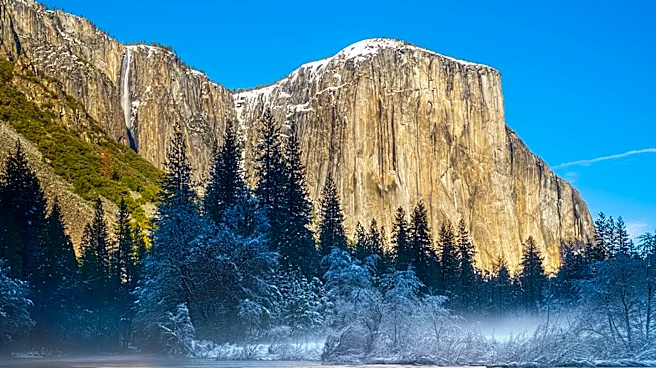
Photographer Michael Shainblum is demonstrating a unique approach to capturing minimalist landscapes in Yosemite National Park, a location often associated with grand, expansive vistas. Shainblum employs a Sigma 150-600mm telephoto lens to compress distant
peaks, effectively isolating single subjects like silhouetted trees against glowing ridgelines. He strategically uses fog as negative space, allowing summits to appear as if floating and simplifying chaotic scenes. His technique involves maintaining a wide aperture (around f/5 to f/6.3) to ensure high shutter speeds, freezing motion in branches and any birds in flight. Shainblum emphasizes the importance of asking what a photograph is truly about, removing competing elements, and using atmospheric conditions like fog to highlight a singular focal point. He also adapts to changing conditions, pivoting to abstract textures on El Capitan when mountains are obscured and adjusting shutter speeds for waterfalls and rainbows.
Why It's Important?
Shainblum's methodology represents a significant shift in landscape photography, particularly in heavily documented locations like Yosemite. By focusing on minimalism and isolation rather than wide, all-encompassing views, he offers a fresh perspective that challenges conventional approaches. This technique allows photographers to create unique and personal images in places millions have already captured, fostering innovation within the genre. The emphasis on subtraction and simplification can inspire other artists to look beyond obvious compositions and find beauty in subtle details. Furthermore, his practical advice on gear usage, such as telephoto compression and managing challenging weather conditions, provides valuable insights for aspiring and professional landscape photographers seeking to differentiate their work and overcome creative saturation in popular natural settings.
What's Next?
The trend towards minimalist and abstract landscape photography, as exemplified by Shainblum, is likely to continue gaining traction. As iconic natural locations become increasingly photographed, more photographers may adopt similar techniques to create distinctive art. Workshops, tutorials, and online content focusing on telephoto compression, atmospheric conditions, and selective composition are expected to grow in popularity. This approach could also influence camera and lens manufacturers to develop more specialized equipment catering to these niche styles, such as lighter, more versatile telephoto lenses. The broader photographic community may see a renewed appreciation for intentionality and thoughtful composition over simply capturing grand scenes, pushing the boundaries of what constitutes a compelling landscape image.
Beyond the Headlines
Shainblum's work subtly critiques the 'checklist' approach to landscape photography, where photographers aim to capture famous viewpoints in a predictable manner. By demonstrating how to find unique perspectives in well-trodden locations, he encourages a deeper engagement with the environment and a more personal artistic vision. This shift can foster greater creativity and originality, moving away from mere documentation towards interpretation. Ethically, it promotes a more mindful interaction with nature, encouraging photographers to observe and understand their surroundings rather than just replicate existing imagery. Culturally, it contributes to the evolving definition of 'beautiful' in landscape art, valuing subtlety and introspection over overt grandeur, and potentially influencing how natural spaces are perceived and appreciated by a wider audience.