


What's Happening?
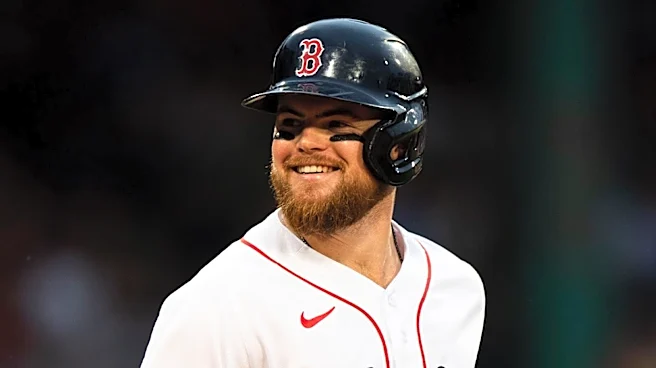
John Henry, the principal owner of Fenway Sports Group (FSG), which owns the Boston Red Sox and Liverpool FC, recently made public statements regarding the Red Sox's performance. Reflecting on his 25 years in Boston, Henry recalled a past sentiment that
winning a World Series in Boston would mean never having to buy a drink in the city again. He noted that this has not been the reality, as he has faced criticism, including 'sell the team' chants from fans, despite the Red Sox breaking an 86-year championship drought in 2004 and winning three more World Series titles in the subsequent 14 years. Henry's comments come as the Red Sox are experiencing a difficult period at the start of the season. His co-owner, Mike Gordon, president of FSG, maintains a lower public profile compared to Henry and Tom Werner, focusing primarily on the operations of Liverpool FC.
Why It's Important?
John Henry's public remarks highlight the intense scrutiny and pressure faced by sports team owners in major U.S. markets, particularly in Boston, where fan expectations are exceptionally high. Despite significant past successes, including multiple World Series championships, current team performance can quickly lead to widespread dissatisfaction and calls for ownership changes. This situation underscores the delicate balance between business ownership and public sentiment in professional sports. For FSG, the public discontent surrounding the Red Sox contrasts with the success of their other major asset, Liverpool FC, which has seen substantial growth and valuation increases under their management. This divergence could influence future investment strategies and resource allocation within FSG's diverse sports portfolio, potentially impacting the long-term competitiveness of the Red Sox.
What's Next?
The ongoing public criticism directed at John Henry and Fenway Sports Group suggests that pressure will continue to mount if the Boston Red Sox's performance does not improve. This could lead to increased calls for changes in team management, player acquisitions, or even ownership structure. While Mike Gordon, FSG's president, is primarily focused on Liverpool FC, the overall performance of FSG's U.S. assets, particularly the Red Sox, will remain a key indicator of the group's standing in the American sports landscape. Future decisions regarding team investments, coaching staff, and player contracts will likely be influenced by the current fan sentiment and the team's on-field results. The contrast between the Red Sox's struggles and Liverpool FC's success may also prompt internal discussions within FSG about strategic priorities and operational approaches for their various sports franchises.
Beyond the Headlines
The dynamic between John Henry and the Boston Red Sox fanbase illustrates a broader trend in professional sports where ownership, despite significant financial investment and past triumphs, remains accountable to public opinion. This phenomenon extends beyond mere financial performance, touching upon the emotional and cultural connection fans have with their teams. The 'sell the team' chants, even after multiple championships, reflect a demand for sustained excellence and a low tolerance for periods of underperformance. This highlights the unique nature of sports ownership as a public trust, where the business aspect is deeply intertwined with community identity and passion. The differing public profiles of Henry and Gordon also shed light on varying approaches to sports management, with some owners preferring a more hands-on, public role, while others opt for a more behind-the-scenes operational focus.