





What's Happening?
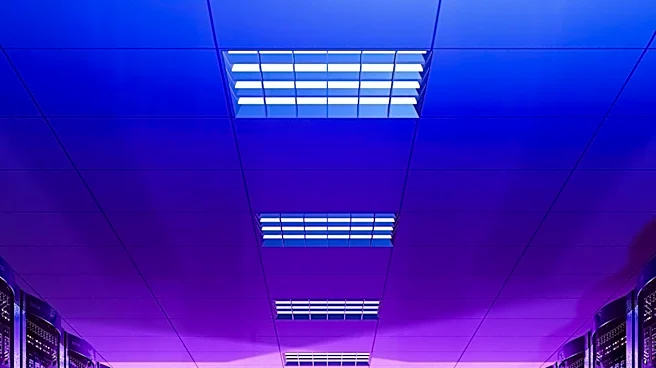
The commercial real estate sector is grappling with the potential for massive data centers to become functionally obsolete due to rapid technological advancements, mirroring the recent challenges faced by the office market. According to a MacRo Commercial
Real Estate report, while computing capacity demand continues to grow, increased efficiency in AI hardware and quantum computing could significantly reduce the physical space required for data processing. This raises questions about the future utility of the tens of millions of square feet of specialized data center buildings currently operating or under development, particularly in regions like Loudoun County, Virginia, which boasts approximately 53.3 million square feet of data center space. The report highlights that if future technology allows the same processing capacity in half the physical space, a substantial portion of existing data centers could become stranded assets. This scenario draws parallels to the impact of remote work on office buildings, where many are now underutilized, leading to efforts like New York City's office-to-residential conversion initiatives.
Why It's Important?
The potential obsolescence of data centers carries significant implications for the U.S. commercial real estate market and local economies. Large-scale data centers represent substantial investments, and their functional obsolescence could lead to considerable financial losses for property owners and investors. Communities heavily invested in data center infrastructure, such as Loudoun County, could face challenges in repurposing these specialized buildings, which may not be suitable for easy conversion due to their unique structural and mechanical requirements. This situation could impact property tax revenues, employment, and the overall economic stability of these regions. The report suggests that while the buildings themselves may become obsolete, the underlying real estate assets, such as electrical capacity, fiber connectivity, and industrial zoning, could retain value, shifting the focus from the structures to the infrastructure they house. This necessitates proactive urban planning and zoning adjustments to accommodate future redevelopment and reinvestment.
What's Next?
Local governments and real estate developers are beginning to address the long-term implications of data center obsolescence. Loudoun County, for instance, is already reviewing its data center policies and development standards to account for evolving industry requirements and to facilitate future redevelopment. This proactive approach aims to avoid regulations that could hinder reinvestment in existing data center properties. The future could see a greater emphasis on adaptive reuse strategies for these specialized buildings, similar to office-to-residential conversions, though the unique nature of data centers presents different challenges. There is also the possibility that greater computing efficiency could lead to even higher demand for computing power, creating new applications and potentially mitigating the issue of obsolescence. However, the uncertainty surrounding these trends underscores the need for flexible planning and investment strategies in the commercial real estate sector.
Beyond the Headlines
The discussion around data center obsolescence extends beyond immediate real estate concerns, touching upon broader themes of technological disruption and urban planning. The rapid pace of innovation, particularly in fields like artificial intelligence and quantum computing, highlights the inherent risk in developing highly specialized infrastructure that may quickly become outdated. This situation prompts a reevaluation of how communities plan for and invest in large-scale industrial developments, emphasizing the importance of adaptability and foresight. The ethical dimension arises in ensuring that the economic benefits of technological advancement are balanced with sustainable land use and responsible development practices. The long-term shift could see a greater focus on modular and flexible building designs that can more easily adapt to changing technological needs, or a greater emphasis on the value of underlying infrastructure rather than the structures themselves. This scenario also underscores the need for continuous dialogue between technology companies, real estate developers, and local governments to anticipate and mitigate future challenges.