

What's Happening?
Defensive tackle Mason Graham has publicly commented on the Cleveland Browns' recent roster adjustments, specifically the signing of Sam Kamara to the active roster. This move comes in response to an injury sustained by fellow defensive lineman Maliek
Collins. Graham emphasized the collective responsibility of the team to elevate their performance and maintain their established standards despite the personnel changes. His remarks highlight the immediate impact of injuries on team dynamics and the need for remaining players to adapt quickly. The addition of Kamara is a direct measure to bolster the defensive line's depth, ensuring the team can continue to field a competitive unit. Graham's statement underscores the professional athlete's perspective on team resilience and the continuous demand for high-level play, regardless of individual player availability. The Browns are navigating these challenges as they progress through their season, with a focus on internal solutions to maintain their competitive edge.
Why It's Important?
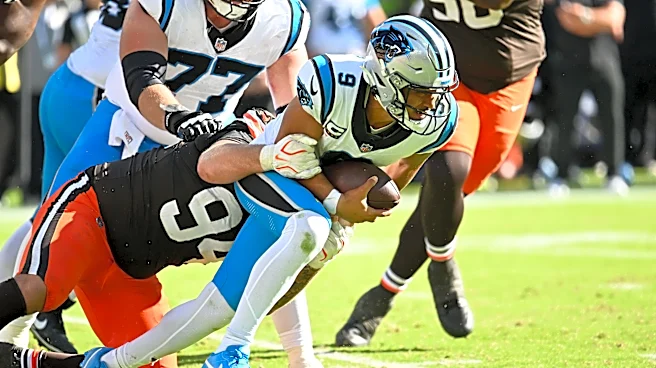
This development is important for several reasons, primarily concerning team performance and player management within professional sports. The injury to a key player like Maliek Collins necessitates immediate strategic adjustments, impacting the team's defensive capabilities. The signing of Sam Kamara reflects the fluid nature of NFL rosters, where teams must constantly evaluate and acquire talent to fill gaps created by injuries or performance issues. For the Browns, maintaining a strong defensive line is crucial for their overall game strategy, affecting their ability to stop opposing offenses and control the line of scrimmage. Mason Graham's comments are significant as they reflect leadership and a commitment to team standards, which can influence team morale and collective effort. This situation also highlights the physical demands of professional football and the constant risk of injury, which can alter a team's trajectory and require significant adaptability from both players and coaching staff. The ability of the team to integrate new players and maintain performance levels will be a key indicator of their resilience.
What's Next?
Following the roster adjustment, the immediate next steps for the Cleveland Browns will involve integrating Sam Kamara into the defensive scheme and preparing him for potential game action. The coaching staff will likely focus on quickly familiarizing Kamara with the team's playbook and defensive strategies. Mason Graham and other defensive linemen will need to continue their elevated performance to compensate for Maliek Collins' absence, ensuring there is no significant drop-off in defensive pressure or run-stopping ability. The team will also closely monitor Collins' recovery timeline, which will dictate future roster decisions and the long-term strategy for the defensive line. Opposing teams will likely analyze the Browns' defensive line adjustments to identify potential weaknesses, making the seamless integration of new personnel even more critical. The performance of the defensive line in upcoming games will be a key indicator of how well the team has managed this injury crisis and adapted to the changes.
Beyond the Headlines
Beyond the immediate roster changes, this situation underscores the broader challenges faced by professional sports organizations in managing player health and maintaining competitive integrity throughout a demanding season. The reliance on a 'next man up' mentality, as articulated by Mason Graham, is a fundamental aspect of team sports, highlighting the importance of depth and preparedness across the entire roster. This incident also brings to light the significant investment teams make in player development and the constant pressure to perform, even when key players are sidelined. The psychological impact of injuries on both the injured player and their teammates can be substantial, requiring strong leadership and team cohesion to overcome. Furthermore, the continuous cycle of player evaluation, acquisition, and integration reflects the dynamic business model of professional sports, where strategic personnel decisions are critical to sustained success and fan engagement. The ability to adapt to unforeseen circumstances like injuries often defines a team's season.