


What's Happening?
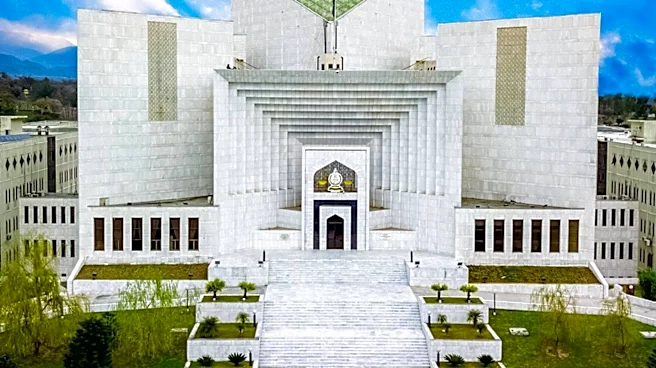
The Pakistan Stock Exchange (PSX) concluded a bullish week, with the KSE-100 index extending its recovery rally. The index gained 3,987 points, or 2.29 percent, closing at 177,873.88 points on Friday, after briefly crossing the 180,000-point barrier.
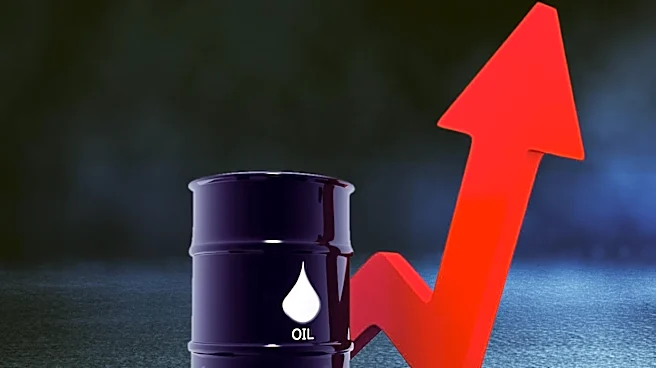
This positive performance is primarily attributed to declining international crude oil prices, which eased inflation concerns and encouraged value-hunting among investors. Improved investor sentiment, fueled by hopes of de-escalation in Middle East tensions following the U.S. midterm election results, also contributed to the rally. Other contributing factors included a 14% year-on-year increase in workers’ remittances to $3.9 billion in October, a fiscal surplus of Rs1,274 billion in the first quarter of FY27, and a 7% year-on-year increase in Federal Board of Revenue collection. Weekly oil production also saw a slight increase of 0.5% to 65,200 barrels per day, and gas output rose by 3.3%.
Why It's Important?
While this news directly concerns the Pakistan Stock Exchange, the underlying factors have broader implications for global financial markets and U.S. economic interests. Declining international oil prices, a key driver of the PSX's rally, directly impact U.S. consumers and businesses by potentially lowering energy costs and mitigating inflationary pressures. The de-escalation of Middle East tensions, which also boosted investor sentiment, is a significant factor for global stability and U.S. foreign policy, as regional conflicts can disrupt trade routes and energy supplies. The increase in remittances and a fiscal surplus in Pakistan indicate a degree of economic resilience that can indirectly benefit U.S. trade partners and global economic stability. For U.S. investors with diversified portfolios, understanding these international market dynamics is crucial, as interconnected global economies mean that events in one region can have ripple effects worldwide. The performance of emerging markets like Pakistan can also signal broader trends in global investor confidence.
What's Next?
Analysts expect the Pakistan Stock Exchange to maintain a cautiously optimistic trajectory, with further gains possible if international oil prices remain stable. The ongoing geopolitical situation in the Middle East will continue to be a critical factor influencing investor sentiment. Domestically, the impact of political uncertainty in Pakistan could cap future rallies. The government's fiscal policies, including revenue collection and debt management, will also play a significant role in sustaining economic stability. For U.S. businesses and policymakers, monitoring these trends will be important for assessing global economic health and potential investment opportunities or risks in emerging markets. The interplay between global energy prices, geopolitical stability, and domestic economic indicators will determine the market's direction in the coming months.
Beyond the Headlines
The PSX's bullish week, driven by declining oil prices and improved sentiment, highlights the intricate connections between global commodity markets, geopolitical events, and national economic performance. The mention of 'value-hunting' suggests that investors are seeking opportunities in undervalued assets, indicating a potential shift in market strategy. The increase in workers' remittances underscores the significant role of expatriate communities in supporting national economies, a phenomenon observed in many developing countries. Furthermore, the slight increase in domestic oil and gas production, while modest, points to ongoing efforts to enhance energy self-sufficiency. This broader context reveals how a combination of external factors (global oil prices, geopolitical stability) and internal economic policies (fiscal management, remittances) collectively shape market dynamics and investor confidence, offering insights into the complex forces at play in the global financial landscape.