



What's Happening?
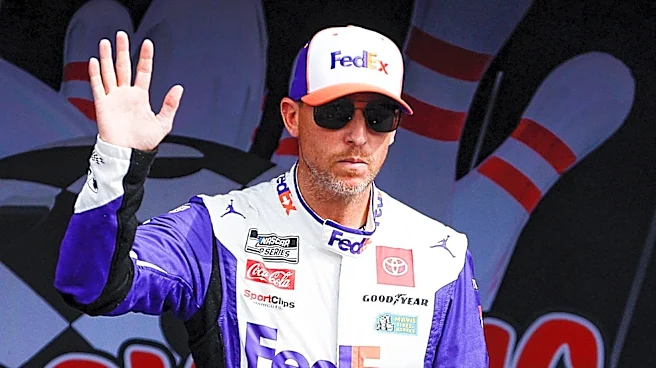
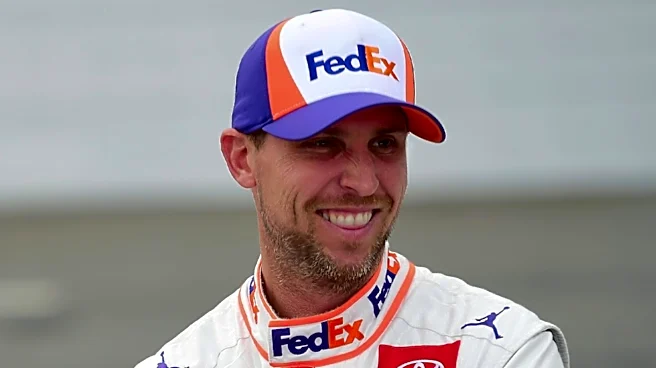
NASCAR driver Denny Hamlin stated that he would consider immediate retirement if he were to experience a crash as severe as Riley Herbst's recent incident at Talladega Superspeedway. Hamlin, who co-owns 23XI Racing, provided an update on Herbst's condition
on his 'Actions Detrimental' podcast, noting that Herbst sustained 'bumps and bruises' and a 'not great' wrist injury. Herbst was involved in a 15-car pile-up with five laps remaining in Sunday's race, where his No. 35 Toyota hit the outside wall before ricocheting across the track and impacting the inside SAFER barrier almost head-on. While Joey Logano's flip garnered significant attention, Hamlin emphasized that Herbst's crash was equally brutal, describing it as 'one of the biggest hits you can possibly take in this car.' Herbst is still listed to race at Martinsville Speedway, but the extent of his wrist injury and its potential impact on his status remain unclear.
Why It's Important?
Hamlin's strong statement about retirement underscores the extreme physical demands and inherent dangers that still exist in NASCAR, despite ongoing safety advancements like SAFER barriers and updated Next Gen cars. His comments bring to light the severe impact forces drivers endure and the personal toll such incidents can take. This perspective from a veteran driver like Hamlin, who is also a team owner, highlights a critical concern within the sport regarding driver safety and the long-term health implications of high-speed collisions. It could prompt further discussions and potentially accelerate research and development into even more robust safety measures for NASCAR vehicles and tracks. For fans, it serves as a stark reminder of the risks drivers undertake, adding a layer of human vulnerability to the spectacle of racing.
What's Next?
Riley Herbst is scheduled to undergo further medical evaluations for his wrist injury, which will determine his fitness to compete in upcoming races, including the one at Martinsville Speedway. NASCAR and teams will likely continue to monitor the performance of the Next Gen car in high-impact crashes, potentially leading to further modifications or safety enhancements. Hamlin's comments might also spark a broader conversation among drivers and team owners about the acceptable limits of risk in racing and the psychological impact of severe accidents. The incident could also influence how NASCAR communicates driver injuries and recovery timelines, especially given the public nature of Hamlin's remarks.
Beyond the Headlines
Hamlin's candid reflection on Herbst's crash delves into the psychological aspect of professional racing, where drivers constantly weigh the pursuit of victory against the very real threat of life-altering injury. His 'retirement' comment reveals a personal threshold for risk that even seasoned competitors can reach. This incident, and Hamlin's reaction, could contribute to a cultural shift within NASCAR, where drivers might become more vocal about safety concerns, potentially influencing future car designs and track configurations. It also highlights the ongoing tension between maintaining the thrill and excitement of high-speed racing and ensuring the utmost safety for its participants. The long-term implications could include a re-evaluation of crash testing protocols and a greater emphasis on driver well-being beyond immediate recovery from injuries.