






What's Happening?
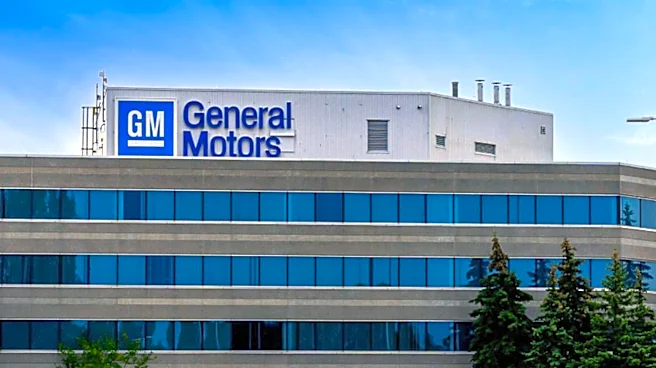
Mary Barra, Chair and CEO of General Motors (GM), continues to spearhead the company's strategic transformation, focusing on electric vehicles (EVs), battery technology, vehicle software, and advanced manufacturing. Appointed CEO in January 2014 and board
chair in January 2016, Barra is recognized for being the first woman to lead a major global automobile manufacturer. Her leadership is guiding GM through a period of significant industry change, emphasizing the development of new technologies to maintain competitiveness. This includes substantial investments in EV platforms and software capabilities, aiming to balance future technological advancements with the financial demands of GM's existing vehicle business. Barra's extensive background in engineering, manufacturing, human resources, and product development within GM provides her with a comprehensive understanding of the company's operations and the broader automotive landscape.
Why It's Important?
Barra's strategic direction for GM is crucial for the U.S. automotive industry, as it navigates the complex transition from traditional internal combustion engines to electric and autonomous vehicles. Her focus on electrification and software development positions GM to compete in a rapidly evolving market, impacting job creation, technological innovation, and environmental sustainability within the U.S. The success of GM's EV strategy could influence consumer adoption rates, infrastructure development, and the overall competitiveness of American automakers against global rivals. Furthermore, her emphasis on product quality and organizational adaptability is vital for maintaining consumer trust and market share in a sector increasingly defined by technological sophistication and customer experience. The shift also has implications for the supply chain, requiring new partnerships and investments in battery production and charging infrastructure.
What's Next?
GM is expected to continue its aggressive investment in electric vehicle platforms and software development, with a particular focus on making EVs more affordable and accessible to a broader consumer base. The company will likely introduce new EV models, such as the 2027 Silverado electric pickup, aiming to capture market share in key segments. Ongoing challenges include managing battery costs, expanding charging infrastructure, and addressing software-related issues, as evidenced by recent recalls. GM's ability to balance these investments with the profitability of its traditional vehicle lines will be critical. The company will also need to adapt its workforce to new manufacturing technologies and skill sets required for EV production and software integration.
Beyond the Headlines
Barra's leadership at GM extends beyond business strategy, serving as a significant example of female leadership in a traditionally male-dominated industry. Her career trajectory, from a co-op student to CEO, highlights the importance of technical expertise combined with business acumen for executive development. The broader implications of GM's transformation include a potential shift in the U.S. energy landscape, reduced carbon emissions, and the redefinition of personal mobility. Ethical considerations around data privacy in connected vehicles and the environmental impact of battery production will also become increasingly prominent. GM's success in this transition could set a precedent for other legacy industries facing similar technological disruptions, emphasizing the need for bold leadership and long-term strategic vision.