



What's Happening?
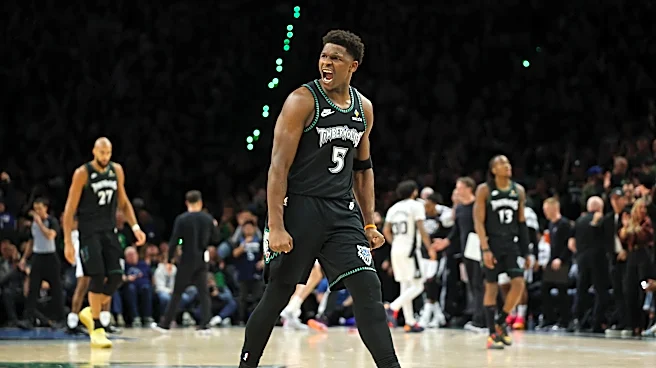
Anthony Edwards, a prominent player in the NBA, has characterized the league as essentially a 'grown-up AAU' (Amateur Athletic Union). According to Edwards, the fundamental difference between the NBA and AAU is that all players are now adults. He asserts
that the teams that foster the strongest bonds and maintain the closest relationships among their members are the ones most likely to achieve championship success. This perspective highlights the importance of camaraderie and internal team dynamics as crucial factors in determining a team's performance and ultimate victory in professional basketball. His comments suggest that beyond individual talent, the collective cohesion of a team plays a significant role in navigating the competitive landscape of the NBA.
Why It's Important?
Edwards's statement underscores a critical aspect of professional sports that extends beyond individual skill: the power of team chemistry. In a league where talent is abundant, his insight suggests that the intangible element of team cohesion can be a decisive differentiator. This perspective is important for team management, coaches, and players, as it emphasizes the need to cultivate strong interpersonal relationships and a unified team environment. For U.S. sports culture, it reinforces the idea that success is not solely about star power but also about collective effort and mutual support. Teams that prioritize building strong internal bonds may see improved performance, greater resilience during challenging periods, and ultimately, a higher chance of securing championships, impacting fan engagement and team valuations.
What's Next?
Following Edwards's remarks, there may be an increased focus within NBA teams on fostering team chemistry and internal relationships. Coaches and general managers might implement more team-building activities or strategies designed to strengthen player bonds, recognizing that this could be a key to competitive advantage. Players themselves may also be more conscious of their roles in contributing to a positive and cohesive team environment. This emphasis could lead to shifts in recruitment strategies, with teams potentially prioritizing players who are not only skilled but also known for their ability to integrate well into a team dynamic. The conversation around team chemistry could become a more prominent topic in sports analysis and commentary.
Beyond the Headlines
Edwards's comparison of the NBA to 'grown-up AAU' touches upon a deeper sociological aspect of professional sports: the transition from amateur to professional environments. It suggests that while the stakes and professionalism increase, the core human element of teamwork and camaraderie remains vital, much like in youth sports. This perspective challenges the notion that professional sports are purely transactional, highlighting the enduring importance of personal connections and shared goals. It also subtly critiques the potential for individualistic tendencies in a league driven by star power, advocating instead for a more collective approach. This could influence how player development programs are structured, emphasizing not just athletic prowess but also social and emotional intelligence within a team setting.