

What's Happening?
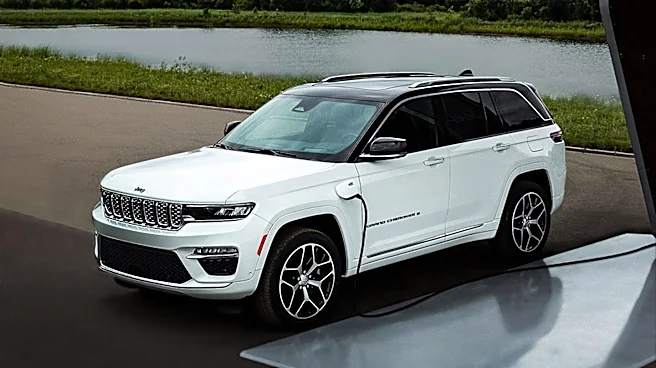
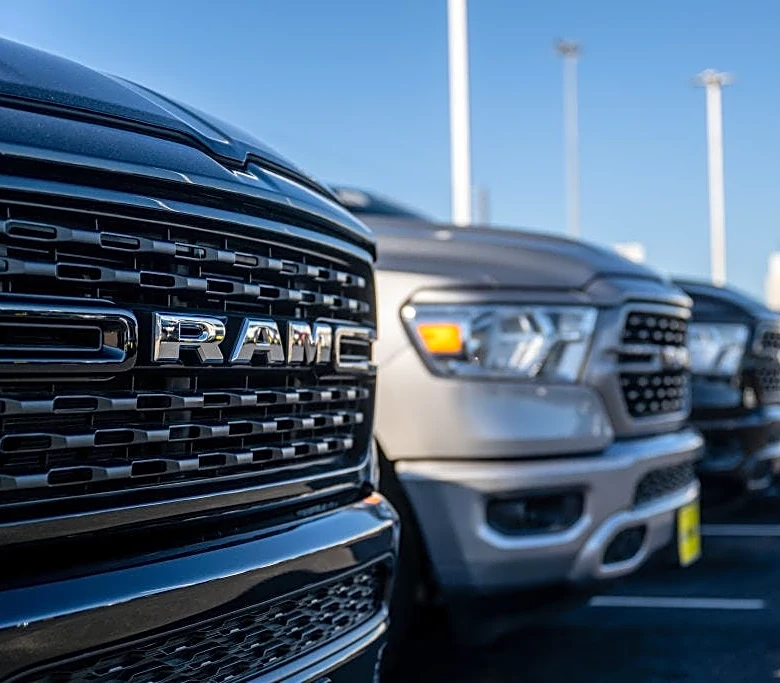
The launch of the Jeep Grand Wagoneer and Ram 1500 extended-range electric vehicles (EREVs) has been delayed again, pushing back their anticipated arrival in the U.S. market. The Jeep Grand Wagoneer EREV, initially slated for production earlier this year,
is now expected to begin rolling off the line in November 2027, representing a six-month delay. Similarly, the Ram 1500 EREV, which was previously set for release by the end of 2026, is now projected to arrive around April 2027. These vehicles are designed to combine a gas engine with an electric battery, where the engine generates electricity to charge the battery and extend the vehicle's range. For instance, the Jeep Grand Wagoneer EREV features a 92 kWh battery pack and a 3.6-liter V6 engine, aiming for a combined range of 500 miles on a full charge and tank of gas, with an estimated 647 horsepower.
Why It's Important?
These repeated delays for Jeep and Ram's EREVs could significantly impact Stellantis's competitive position in the rapidly evolving U.S. electric vehicle market. As other automakers, including Hyundai, Genesis, Ford, and Volkswagen's Scout, are actively developing and launching their own extended-range EV models, Stellantis risks falling further behind. The U.S. market is seeing increasing demand for electrified vehicles, and delays in bringing new models to market can result in lost sales and market share. Consumers seeking EREVs, which offer a bridge between traditional internal combustion engines and fully electric vehicles by mitigating range anxiety, may turn to competitors who can deliver products sooner. This situation could also affect Stellantis's ability to meet future emissions regulations and capitalize on the growing segment of buyers interested in hybrid and extended-range options.
What's Next?
With the new projected launch dates of November 2027 for the Jeep Grand Wagoneer EREV and April 2027 for the Ram 1500 EREV, Stellantis will likely focus on refining production processes and supply chains to avoid further setbacks. The company will need to closely monitor competitor launches and market trends to ensure their EREVs remain competitive upon release. Marketing efforts will also be crucial to maintain consumer interest despite the delays and to highlight the unique benefits of their extended-range technology. Additionally, the performance and reception of Hyundai's Santa Fe EREV, expected in the first half of 2027, will provide an important benchmark for the EREV segment in the U.S., potentially influencing Stellantis's strategies for its delayed models.
Beyond the Headlines
The recurring delays in the development and launch of these EREVs underscore the complexities and challenges inherent in transitioning to electrified powertrains, even for established automotive giants. Beyond technical hurdles, factors such as supply chain disruptions, battery technology advancements, and regulatory landscapes can all contribute to production timelines. For Stellantis, these delays might also reflect a strategic re-evaluation of their EREV offerings in response to evolving consumer preferences and the rapid pace of innovation in the EV sector. The success of EREVs hinges on their ability to offer a compelling balance of range, performance, and cost-effectiveness, and any prolonged delay could lead to their technology being perceived as less cutting-edge compared to newer market entrants.