





What's Happening?
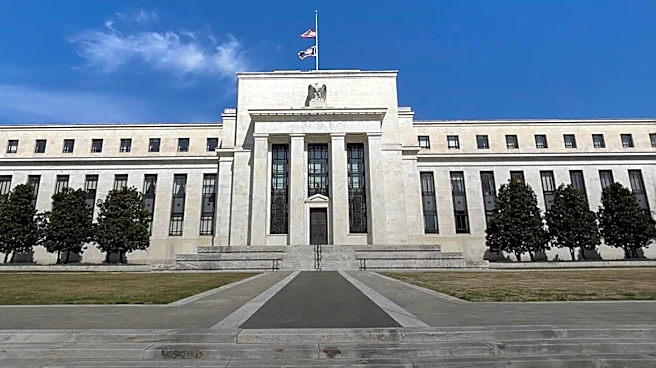
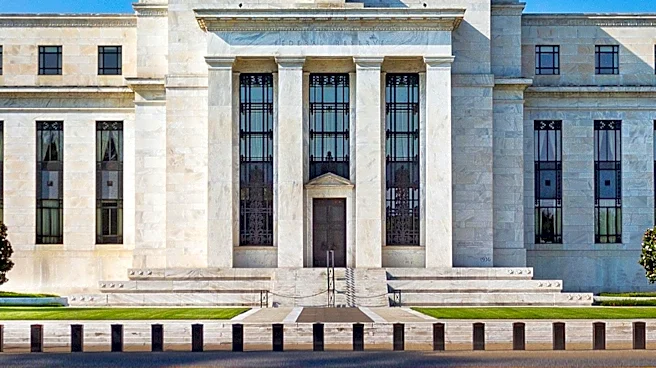
U.S. banks experienced a notable decline in demand for commercial and industrial (C&I) loans from firms of all sizes in the third quarter, marking the first such weakening since the second quarter of 2025, according to the Federal Reserve’s October 2026
Senior Loan Officer Opinion Survey. While C&I loan standards remained largely unchanged for large and middle-market firms, they tightened modestly for small firms. Banks attributed this softening demand to decreasing customer investment in plant or equipment products and a shift by borrowers to more attractive bank or nonbank funding sources. Concurrently, commercial real estate (CRE) standards tightened across all three categories—construction and land development, nonfarm nonresidential, and multifamily—for the first time since the third quarter of 2024. Residential mortgage demand also weakened across all seven categories, though credit card demand saw its strongest uptick in four years, with banks citing customers' spending needs in response to price changes.
Why It's Important?
The reported decline in business loan demand and tightening credit standards for commercial real estate and residential mortgages signal potential headwinds for economic growth and the housing market in the U.S. The shift of borrowers to nonbank lenders, particularly private credit and private equity funds, suggests a changing landscape in corporate financing, potentially impacting the traditional banking sector's role. The tightening of CRE standards, especially for construction and multifamily lending, could slow down new development and exacerbate housing supply issues. Conversely, the surge in credit card demand, attributed to consumers responding to higher prices, indicates potential inflationary pressures and a reliance on credit for household spending, which could lead to increased consumer debt. These trends collectively point to a complex economic environment where different sectors face varying credit conditions and demand dynamics.
What's Next?
The Federal Reserve will likely continue to monitor these lending trends closely, as they provide insights into the effectiveness of monetary policy and the overall health of the U.S. economy. The minutes from the October 28 Federal Open Market Committee meeting may offer further commentary on these developments. If the shift to nonbank lenders continues, it could prompt regulators to examine the oversight of the private credit market more closely. For the housing market, sustained weak mortgage demand and tight credit standards could lead to a prolonged period of slower activity, potentially impacting home prices and construction starts. Businesses may increasingly explore alternative financing options, while consumers might face higher borrowing costs on credit cards if inflationary pressures persist.
Beyond the Headlines
The divergence in lending trends—weakening business and mortgage demand versus surging credit card demand—highlights a potential stratification in financial health across different segments of the U.S. economy. The increased reliance on credit cards for everyday spending, as noted by banks, could indicate a broader erosion of household purchasing power due to inflation, pushing more consumers into debt. This could have long-term implications for consumer solvency and financial stability. Furthermore, the tightening of bank lending to nonbank financial institutions, even as demand from these institutions rises, suggests a cautious approach by traditional banks to perceived risks in the shadow banking system. This could lead to a more fragmented financial system, with potential implications for systemic risk and the transmission of monetary policy.