
What's Happening?
Billionaire investor Peter Thiel's hedge fund, Thiel Macro, has significantly re-entered the market, allocating approximately 33% of its $419 million portfolio to three energy companies during the second quarter. Among these, Thiel Macro built a $59 million position
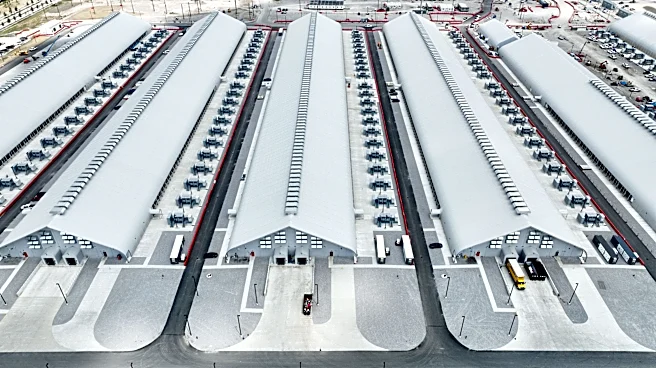
in Vistra Corp. (NYSE:VST), representing about 14% of the fund. Thiel's investment strategy appears to view electricity, rather than chips, as the primary bottleneck for AI development. Vistra is highlighted for its role in providing carbon-free baseload power to AI hyperscalers, operating nuclear plants in the Pennsylvania-New Jersey-Maryland (PJM) region. Vistra has already secured 20-year power purchase agreements with Amazon Web Services (AWS) for 1,200 megawatts and with Meta for over 2,600 megawatts from its Ohio and Pennsylvania sites. Additionally, Vistra is part of the Helix venture, a $10 billion partnership with NVIDIA, KKR, and the Kuwait Investment Authority, aimed at delivering nuclear power and data center infrastructure.
Why It's Important?
Peter Thiel's substantial investment in energy stocks, particularly Vistra, underscores a strategic perspective that reliable and consistent power supply is paramount for the advancement of artificial intelligence. This view challenges the conventional focus solely on semiconductor technology, highlighting the critical infrastructure required to support AI's immense computational demands. Vistra's existing nuclear power assets and its established partnerships with major tech companies like AWS and Meta position it as a key enabler of the AI industry. Thiel's investment signals a belief that companies providing stable, 24/7 power, especially carbon-free sources, will be crucial beneficiaries of the AI boom, potentially driving significant long-term value for Vistra and similar energy providers.
What's Next?
Thiel Macro's investment could draw increased attention to Vistra Corp. from other institutional investors and market analysts, potentially influencing its stock performance. Vistra is expected to continue expanding its partnerships with AI hyperscalers and developing its nuclear power capabilities to meet the growing demand for data center energy. The success of ventures like Helix, which integrates nuclear power with data center infrastructure, will be a key indicator of Vistra's strategic effectiveness. The broader market will likely observe whether Thiel's thesis—that electricity is the bottleneck for AI—gains wider acceptance and drives further investment into energy infrastructure companies with similar capabilities.
Beyond the Headlines
Peter Thiel's investment in Vistra and other energy stocks reflects a deeper understanding of the foundational requirements for technological progress. The massive energy consumption of AI data centers presents both a challenge and an opportunity for the energy sector. By focusing on baseload, carbon-free power sources like nuclear, Thiel's strategy addresses not only the reliability needs of AI but also the growing environmental concerns associated with energy-intensive computing. This approach could catalyze a re-evaluation of energy infrastructure as a critical component of national technological competitiveness and sustainability. It also highlights the potential for unexpected synergies between seemingly disparate industries, where traditional energy providers become indispensable partners in the digital revolution.