






What's Happening?
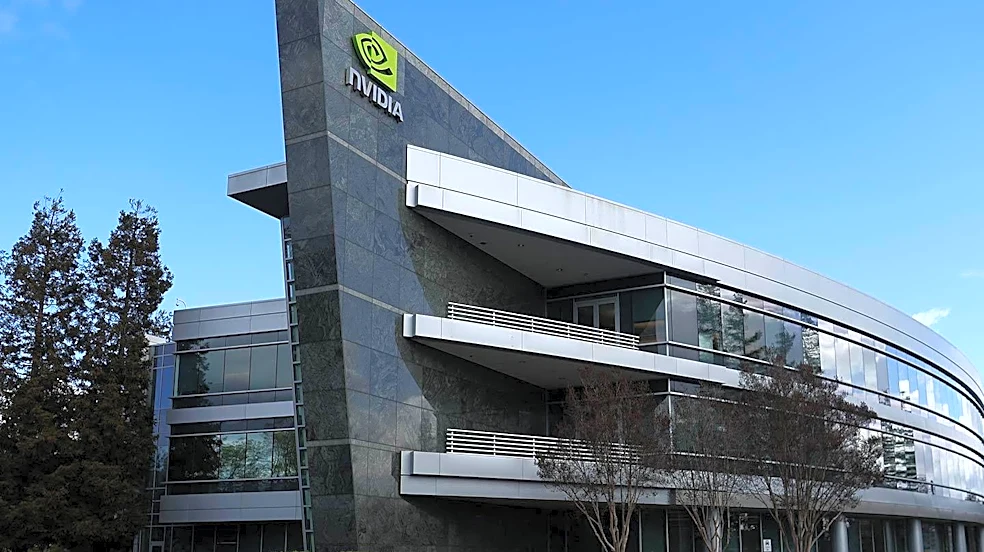
Nvidia, under CEO Jensen Huang, has transformed the concept of an "AI factory" into a physical reality by introducing modular, containerized AI computing power clusters. These prefabricated solutions, featuring the latest Vera Rubin system, aim to drastically
reduce the deployment time for AI data centers from traditional six months to as little as 14 days. This rapid deployment is achieved by integrating computing, network, wiring, power supply, and liquid cooling systems into factory-assembled containers. The DSX POD hardware product line is designed to shorten the "Time to First Token," enabling customers to generate revenue from AI operations much faster. Nvidia is also addressing power and water consumption challenges with software tools like DSX MaxLPS for dynamic power distribution and DSX Flex for grid load adjustment, alongside 100% liquid cooling solutions that significantly reduce water usage.
Why It's Important?
This development is crucial for the U.S. technology and business sectors, particularly for companies heavily investing in AI. By significantly cutting down the deployment time for AI infrastructure, Nvidia is enabling businesses to accelerate their AI initiatives, from large model training to production-level inference. This rapid deployment capability can provide a competitive edge to U.S. companies, allowing them to bring AI-powered products and services to market faster. The focus on power and water efficiency also addresses critical environmental and operational concerns for data centers, potentially leading to more sustainable and cost-effective AI operations. This innovation could democratize access to advanced AI computing power, benefiting a wider range of industries and fostering a more robust AI ecosystem in the U.S.
What's Next?
The introduction of these modular AI factories is expected to lead to a faster build-out of AI data centers across the U.S. and globally. Nvidia's partners, including Dell, HPE, Lenovo, and various cloud providers, are expected to begin delivering these prefabricated modular AI factories in early 2027. This will likely result in increased adoption of Nvidia's full-stack AI factory reference architecture, the NVIDIA DSX platform. The emphasis on energy efficiency and reduced water consumption could also set new industry standards for sustainable data center operations. Furthermore, the open-source DSX OS infrastructure management software suite and the NVIDIA SimReady Central digital model library will empower engineers to design and manage AI factories more efficiently, potentially accelerating AI research and development.
Beyond the Headlines
Beyond the immediate benefits of speed and efficiency, Nvidia's modular AI factories represent a fundamental shift in how AI infrastructure is conceived and deployed. By turning supercomputer manufacturing into an automated assembly line, Nvidia is not just selling chips but providing a complete, integrated solution. This approach could lead to a standardization of AI data center design and operation, making advanced AI more accessible and scalable. The environmental implications are also profound, with significant reductions in power and water consumption, addressing critical sustainability challenges associated with large-scale AI. This move could also solidify Nvidia's position as a dominant force in the AI industry, influencing the future direction of AI development and deployment across various sectors in the U.S. and beyond.