
What's Happening?
Several celebrities have voiced strong criticisms regarding their portrayals in biopics, citing inaccuracies, unauthorized use of their likeness, and perceived exploitation. Olivia de Havilland sued Ryan
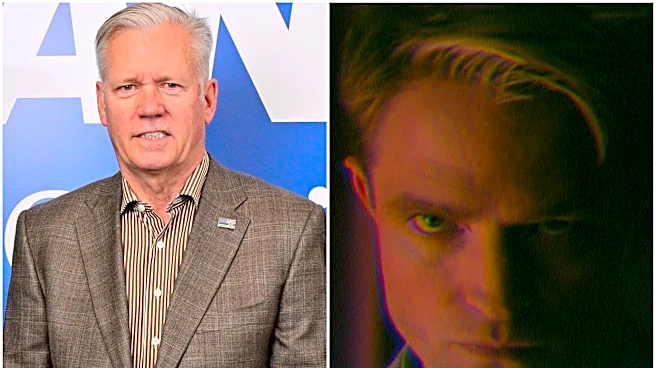
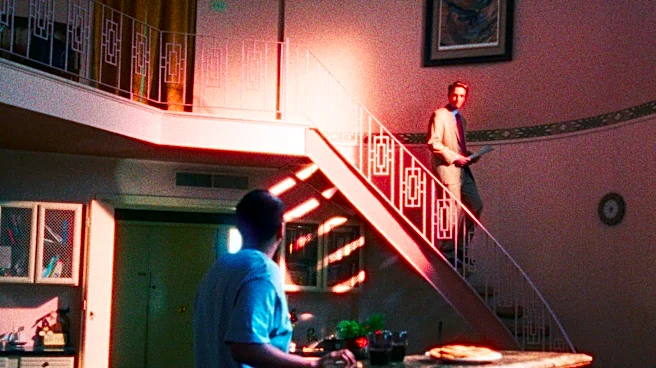
Murphy and FX Networks in 2017 over her depiction in 'Feud: Bette and Joan,' claiming she was portrayed as a 'petty gossip' and that false words were attributed to her. Mark Zuckerberg expressed that 'The Social Network' 'made up a bunch of stuff' that he found 'hurtful.' Pamela Anderson stated she had 'no desire' to watch 'Pam & Tommy' and felt producers should have sought her permission. Chris Hansen criticized 'Primetime' for using his 'name, image and likeness' without consent, calling it 'exploitative.' Ike Turner was 'real angry' about 'What's Love Got to Do with It,' claiming it was 'full of lies.' Jada Pinkett Smith highlighted inaccuracies in 'All Eyez on Me' regarding her relationship with Tupac Shakur, and Lil' Kim disliked her 'character' portrayal in 'Notorious,' feeling it misrepresented her talent and self-respect.
Why It's Important?
This trend of celebrities criticizing their biopic portrayals highlights a significant tension between artistic license and personal truth in biographical filmmaking. It raises crucial questions about intellectual property rights, the ethics of representation, and the potential for emotional distress caused by fictionalized accounts of real lives. For the entertainment industry, these criticisms can lead to increased scrutiny of production practices, potentially influencing how biopics are developed and marketed. It also underscores the power dynamics between creators and subjects, particularly when the subjects are still living. The legal challenges, such as de Havilland's lawsuit, although ultimately dismissed, bring attention to the limited legal recourse individuals may have against portrayals they deem inaccurate or damaging, impacting future legal precedents in this area.
What's Next?
The ongoing debate surrounding biopic accuracy and celebrity consent is likely to continue shaping the entertainment landscape. Filmmakers may face increased pressure to consult with subjects or their estates, potentially leading to more collaborative, albeit potentially constrained, storytelling approaches. We might see a rise in 'authorized' biopics, where subjects have more control over their narratives, or conversely, a greater emphasis on fictionalized accounts to avoid legal and ethical entanglements. The public's perception of biopics could also shift, with audiences becoming more aware of the potential for embellishment or misrepresentation. This could lead to a demand for greater transparency from production companies regarding their research and creative processes.
Beyond the Headlines
Beyond the immediate disputes, these criticisms delve into deeper ethical and philosophical questions about memory, narrative, and public identity. When a celebrity's life is adapted for the screen, it becomes a public narrative, often shaping how they are remembered. The struggle for control over one's own story, especially when it involves sensitive or painful experiences, touches upon fundamental rights to privacy and self-determination. The industry's reliance on dramatic embellishment for entertainment value often clashes with the subjects' desire for factual accuracy and respectful representation. This ongoing tension reflects broader societal discussions about truth in media, the impact of storytelling on individual legacies, and the responsibilities of creators when depicting real people.