

What's Happening?
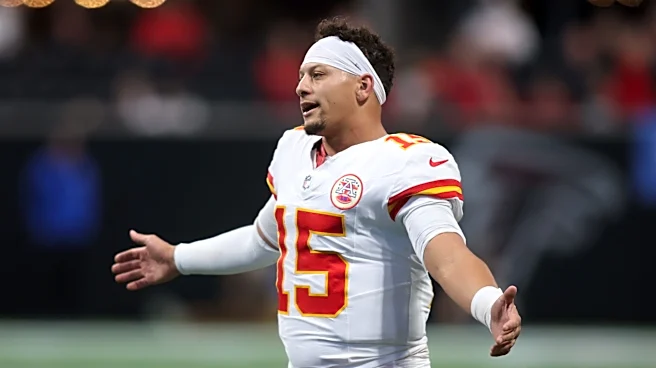
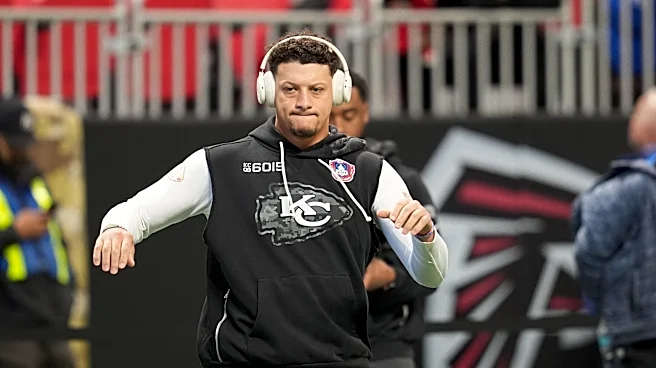
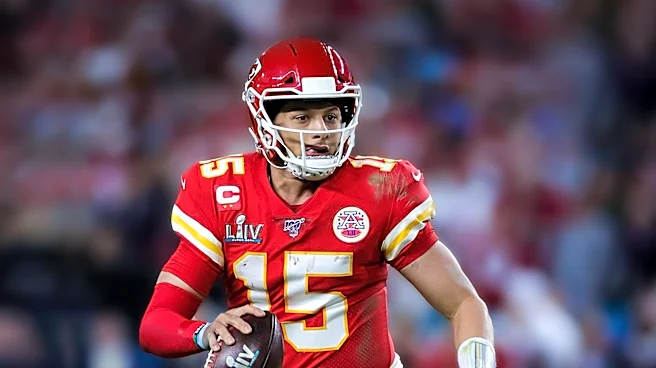
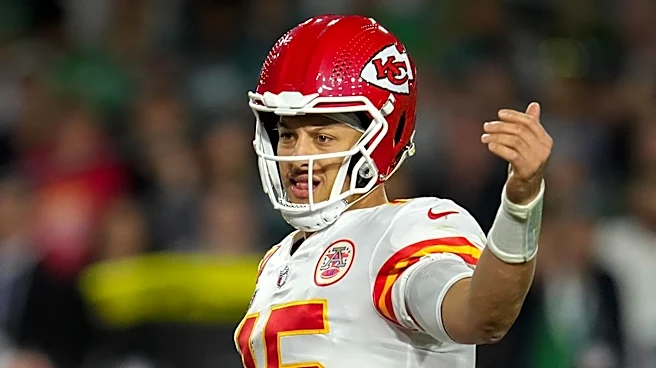
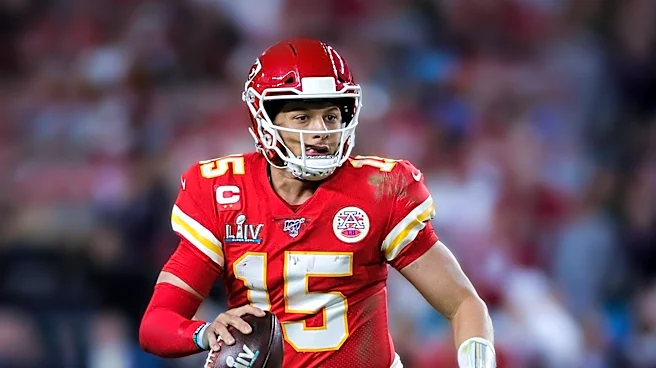
Kansas City Chiefs quarterback Patrick Mahomes has significantly altered his playing style this season as he continues to recover from a torn ACL and LCL suffered in December. Mahomes, who turned 31 in September, has acknowledged that this knee injury
will likely impact him for the remainder of his career. This season, he has focused on becoming more comfortable operating within the pocket, reducing his reliance on scrambling, which was a hallmark of his earlier career. For instance, in a recent game against the Atlanta Falcons, Mahomes opted for a shorter gain after a scramble, recognizing his diminished burst compared to previous seasons. This strategic shift is also influenced by multiple offensive line injuries the team has faced. Mahomes is now delivering the ball faster than ever and has achieved his lowest sack percentage in five seasons, according to TruMedia, indicating a deliberate adaptation to his physical condition and team circumstances.
Why It's Important?
This adaptation by Patrick Mahomes is crucial for the Kansas City Chiefs' performance and long-term success. Mahomes' ability to evolve his game, similar to how other veteran quarterbacks have extended their careers, demonstrates his resilience and strategic intelligence. By prioritizing pocket play and quicker throws, he mitigates the risks associated with his knee injury, potentially prolonging his career at an elite level. This shift also impacts the offensive scheme, requiring receivers and offensive linemen to adjust to a faster-paced, less scramble-dependent approach. While his scrambling ability previously provided a significant advantage, his current style emphasizes precision and timing, which could make the Chiefs' offense more consistent and less reliant on individual heroics. The team's ability to maintain high performance despite their star quarterback's physical limitations and offensive line challenges highlights their adaptability and strategic depth.
What's Next?
As Patrick Mahomes continues his recovery and adaptation, the focus will be on how consistently he can maintain this new style of play and its effectiveness in critical game situations. The Chiefs' coaching staff will likely continue to tailor offensive strategies to maximize Mahomes' strengths within the pocket, emphasizing quick reads and precise passing. His ongoing recovery will be a key factor, with continued monitoring of his knee's response to game-day demands. Future offseasons will likely involve targeted training to further strengthen his knee and refine his pocket presence. The team will also need to assess how this evolving playstyle impacts personnel decisions, particularly regarding offensive line protection and receiver skill sets that complement a quicker passing game. The long-term success of this adaptation will determine Mahomes' longevity and the Chiefs' sustained competitiveness.
Beyond the Headlines
Mahomes' evolution transcends mere on-field adjustments; it represents a broader narrative of athletic longevity and strategic adaptation in professional sports. His willingness to fundamentally alter his game, even at a relatively young age for a quarterback, challenges the perception that elite athletes must always rely on their peak physical attributes. This shift could serve as a blueprint for other athletes facing similar physical challenges, emphasizing the importance of mental acuity and technical refinement over raw athleticism. Furthermore, it highlights the intricate relationship between player health, team strategy, and long-term career planning in the NFL. The Chiefs' ability to support and integrate this change also speaks to the sophistication of their coaching and medical staff, demonstrating how a holistic approach to player management can sustain high performance even when faced with significant physical setbacks.