





What's Happening?
Voyage Foods, launched in 2021, is transitioning from supplying branded retail products to a business-to-business (B2B) model, focusing on industrial ingredient supply. The company aims to contribute to a more sustainable food industry by producing cocoa-free
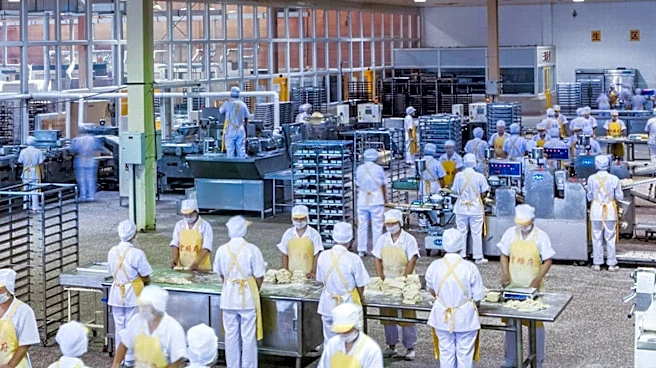
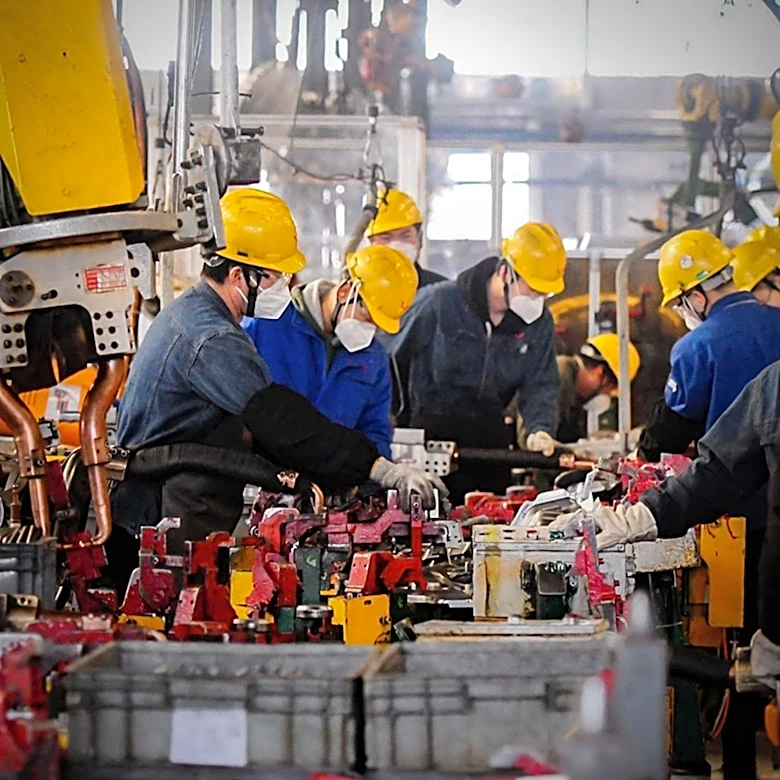
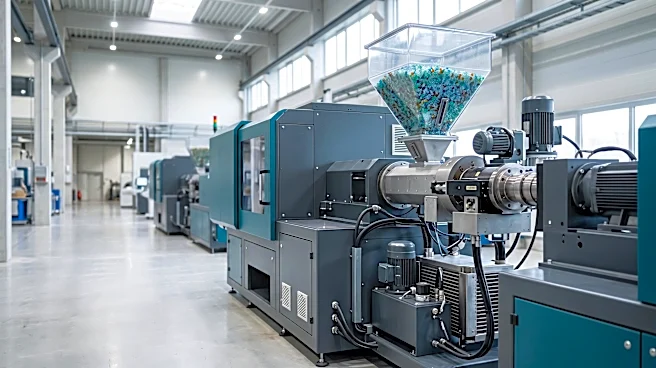
chocolate, bean-free coffee, and nut-free spreads. Voyage Foods has secured over $100 million in funding and has partnered with Cargill as its global distributor for cocoa- and nut-free ingredients. To support this shift, the company has opened a 284,000-square-foot manufacturing facility in Ohio. This strategic move allows Voyage Foods to concentrate on scaling production and ensuring consistent quality for commercial customers, including consumer packaged goods (CPG) clients and large foodservice operators. Their products utilize ingredients like upcycled grape seeds for cocoa-free chocolate, roasted chickpeas for bean-free coffee, and sunflower seeds, grape seeds, chickpeas, and rice protein for nut-free spreads.
Why It's Important?
Voyage Foods' pivot to a B2B model and its focus on alternative ingredients have significant implications for the U.S. food industry. By developing products that bypass ingredients prone to supply chain volatility, large climate footprints, and fluctuating prices, the company offers solutions for food manufacturers seeking greater stability and sustainability. The partnership with Cargill, a major global distributor, provides a robust channel for these alternative ingredients to reach a wide array of food producers, potentially influencing ingredient sourcing across the industry. This move also addresses growing consumer demand for allergen-free options and environmentally conscious products. For U.S. food companies, integrating these alternatives can mitigate risks associated with traditional commodity markets, enhance product resilience, and appeal to a broader consumer base concerned with health and sustainability. The cost-effectiveness of these alternatives, particularly cocoa-free chocolate, offers a compelling economic incentive for adoption.
What's Next?
Voyage Foods is actively scaling up production at its Ohio facility, with plans to expand its reach within the industrial ingredient market. The company anticipates further announcements regarding partnerships with large-scale brand manufacturers in the coffee sector. There is also a growing interest among manufacturers in using a hybrid approach, blending traditional ingredients with Voyage Foods' alternatives, which could become a significant trend. The company expects to see more products featuring its cocoa-free chocolate (NextCoa) and bean-free coffee hitting the market in the coming months. As production continues to ramp up, Voyage Foods aims to fill its manufacturing facility's capacity, which is currently in the tens of thousands of metric tons. The company's focus will remain on expanding its pipeline and securing more commercial customers, further solidifying its position as a key supplier of sustainable food ingredients.
Beyond the Headlines
Voyage Foods' strategy reflects a deeper transformation within the food industry, driven by climate change, supply chain vulnerabilities, and evolving consumer preferences. The use of upcycled ingredients, such as grape seeds, highlights a broader movement towards circular economy principles in food production, reducing waste and maximizing resource utilization. This approach challenges traditional notions of food ingredients and encourages innovation in ingredient science. While the company aims to expand the market rather than directly compete with traditional coffee and chocolate, its success could prompt a re-evaluation of agricultural practices and commodity reliance. The need for clear labeling, such as 'confectionery alternative' or 'chocolatey,' also underscores the ongoing dialogue between food innovation, consumer perception, and regulatory frameworks, shaping how new food products are introduced and accepted in the market.