


What's Happening?
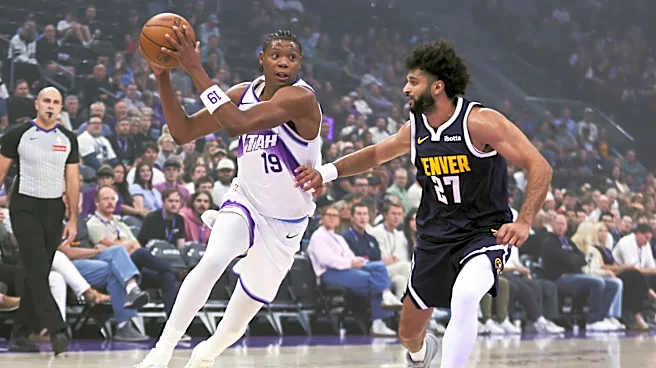
Aaron Gordon of the Denver Nuggets is a subject of NBA trade rumors, primarily due to the team's impending financial challenges. The Nuggets are facing a 'second-apron crunch' next year, which necessitates greater financial flexibility. While the team plans
to offer Nikola Jokic a substantial $360 million extension next summer, they are exploring options to manage their payroll. Dealing Gordon, who has three years and $110 million remaining on his contract, is being considered as a potential solution, despite the difficulties posed by his contract size and past health issues. The Nuggets previously opted not to move Cam Johnson's expiring contract this summer, valuing the $23 million it would free up. This financial situation is driving the team to evaluate significant roster changes to maintain competitiveness while adhering to salary cap restrictions.
Why It's Important?
The trade speculation surrounding Aaron Gordon highlights the significant financial pressures faced by NBA teams operating under the league's salary cap and luxury tax rules, particularly the 'second apron.' For the Denver Nuggets, a team with championship aspirations and a superstar like Nikola Jokic, managing payroll effectively is crucial for long-term success and roster construction. A potential trade of a key player like Gordon could impact team chemistry and on-court performance, as he is a vital part of their starting five. The decision to trade or retain Gordon will reflect the team's strategic balance between financial prudence and competitive integrity. This situation also underscores how player contracts, health issues, and future extensions for other stars can force difficult decisions, potentially reshaping team rosters and influencing the broader NBA trade market.
What's Next?
The Denver Nuggets will continue to evaluate their financial situation and roster needs as the 'second-apron crunch' approaches. While a trade involving Aaron Gordon is a possibility, it is complicated by his contract and health. The team will likely explore various scenarios to create the necessary cap flexibility, which could include other roster moves or negotiations. The upcoming season will be critical for Gordon to demonstrate his value and health, potentially influencing his trade market. The Nuggets' performance and the progress of other players, such as Julian Strawther and Spencer Jones, could also affect the urgency of making a significant trade. Ultimately, the team's priority will be to secure Nikola Jokic's long-term extension while maintaining a competitive roster, which may involve difficult decisions regarding current players.
Beyond the Headlines
The situation with Aaron Gordon and the Denver Nuggets reflects a broader systemic challenge in the NBA: balancing superstar contracts with team-building under increasingly stringent financial regulations. The 'second apron' is designed to curb excessive spending by top-tier teams, forcing them to make tough choices about retaining talent. This can lead to a 'churn' of valuable role players, even those integral to a team's success, as organizations prioritize their foundational stars. The ethical dimension arises when players, through no fault of their own, become trade assets due to financial constraints rather than performance issues. This dynamic can create uncertainty for players and impact team loyalty, as the business side of basketball often dictates roster decisions over sentimental or on-court contributions. It also highlights the constant strategic chess match between front offices to optimize their rosters within the league's complex financial framework.