








What's Happening?
Kelly Clarkson has publicly accused Art of Play, a Brooklyn-based store, of lying and treating her rudely during a recent shopping visit. Clarkson initially posted on social media that she felt judged and was told she couldn't afford an item, likening
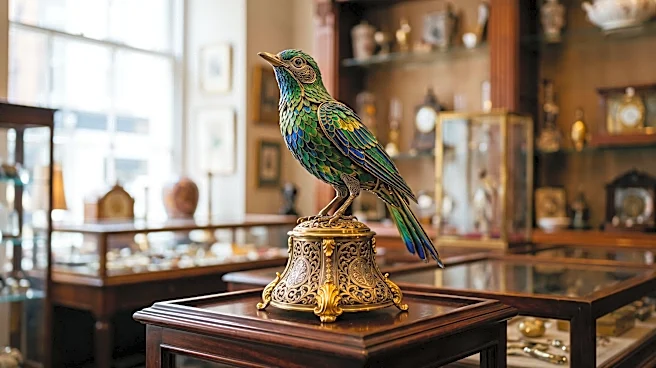
the experience to Julia Roberts' character in 'Pretty Woman.' Art of Play responded, denying her account and stating that the item in question, a singing bird automaton named 'Molly,' was a permanent fixture and not for sale. They also expressed surprise at the widespread outrage from Clarkson's 8 million followers. Clarkson then issued a follow-up statement, directly refuting Art of Play's denial. She claimed there was a price tag of $15,000 on the item and that a store employee condescendingly told her it was for sale but suggested finding something comparable. Clarkson reiterated her support for small businesses but emphasized that it does not excuse rude behavior.
Why It's Important?
This incident highlights the significant impact of celebrity social media presence on small businesses. Clarkson's initial post quickly garnered widespread attention, leading to a public relations crisis for Art of Play. The dispute also raises questions about customer service standards and how businesses manage interactions with high-profile individuals. For consumers, it underscores the power of online platforms to share experiences, both positive and negative, and influence public perception. The differing accounts of the interaction create a 'he said, she said' scenario, making it difficult for the public to ascertain the full truth, yet the immediate backlash against the store demonstrates the swift judgment that can occur in the digital age. This event could influence how other small businesses approach customer interactions, particularly with public figures, and how they manage their online reputation.
What's Next?
The immediate aftermath will likely involve continued public discussion on social media regarding the incident. Art of Play may face ongoing scrutiny and potential impacts on its business, depending on how the public perceives the conflicting narratives. Clarkson's large following means her statements carry considerable weight, and the store's reputation could be affected in the long term. It remains to be seen if either party will issue further statements or if the situation will simply fade from public attention. The incident could also serve as a case study for public relations professionals on managing celebrity complaints and online crises for small businesses. There is no indication of legal action, suggesting the dispute will remain in the court of public opinion.
Beyond the Headlines
Beyond the immediate dispute, this event touches on broader themes of consumer perception, classism, and the power dynamics inherent in celebrity culture. Clarkson's 'Pretty Woman' analogy resonates with a common experience of feeling judged based on appearance or perceived wealth in retail settings. This incident could spark conversations about unconscious biases in customer service and the importance of treating all customers with respect, regardless of their perceived status. It also underscores the double-edged sword of social media for businesses: while it offers direct engagement with customers, it also exposes them to rapid and widespread criticism. The differing accounts also highlight the subjective nature of customer experiences and the challenges businesses face in controlling their narrative in an era of instant online feedback.