







What's Happening?
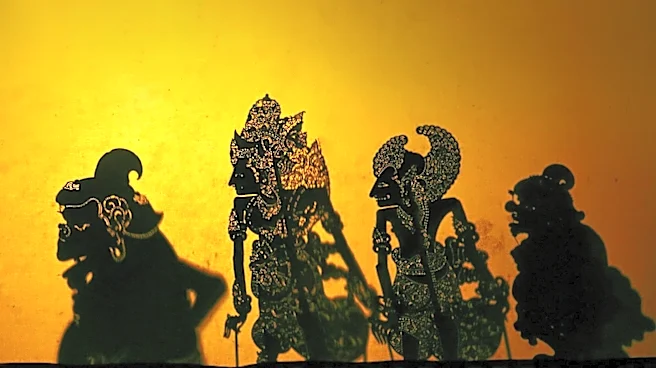
Associate Professor of Spanish Jared White and his puppeteering troupe, Dragoncillo, recently performed "¡Quijóteres!," a shadow puppet adaptation of Miguel de Cervantes’s classic novel "Don Quixote." The performances took place on November 3 and 4 in Plaster
Auditorium at Hillsdale College, entertaining an audience of students, professors, and families. The troupe, comprising four Spanish professors from various universities, specializes in literature from the Golden Age of Spain. This marked the 10th performance of the show since its debut in 2014. Initially, the story was presented with 60 hand puppets manipulated by five puppeteers, but due to a member's retirement, Dragoncillo adapted the show for four performers using lighter, 3D-printed shadow puppets. A key advantage of shadow puppets, as noted by White, is the ability to project the script for actors to read, unlike hand puppets which require memorization.
Why It's Important?
This innovative approach to classical literature makes complex works like "Don Quixote" accessible to a broader audience, including those in universities and local communities through libraries and Hispanic centers. The use of shadow puppets allows for a dynamic and engaging retelling, which can foster an appreciation for Spanish Golden Age literature among students and the general public. The bilingual nature of the performances, offered in both English and Spanish, is particularly significant, enabling the troupe to connect with diverse audiences, including those who are monolingual in either language. This initiative highlights the educational value of creative adaptations in bridging cultural and linguistic gaps, making academic content more approachable and enjoyable for non-specialists and students alike.
What's Next?
Troupe member Jason Yancey, who adapted the original novel into a hand puppet show, further adapted the story into a bilingual children’s book in 2024, titled "¡Quijóteres! — The Misadventures Títere Don Quixote de La Mancha." This progression from novel to hand puppet show, then shadow puppet show, and now a children's book, indicates a continued effort to expand the reach and accessibility of the story. The troupe plans to continue performing for various audiences, leveraging the flexibility and accessibility of shadow puppetry. The success of this adaptation may inspire other academic groups to explore similar creative methods for presenting classical works, potentially leading to more interdisciplinary projects that combine literature, theater, and technology.
Beyond the Headlines
The use of puppets, particularly shadow puppets, offers a unique pedagogical tool. Associate Professor White noted that puppets can "take the heat" off actors, making it an accessible form for individuals without formal acting experience, including students. This aspect can encourage greater participation in theatrical arts and literary interpretation among those who might otherwise be hesitant. The layered reality inherent in puppet theater, as described by troupe member Alejandra Juno Rodríguez Villar, also provides a compelling way to explore complex themes and representations, mirroring the intricate narratives of classical literature. This blend of education, entertainment, and cultural outreach underscores the enduring power of storytelling through innovative artistic mediums.