







What's Happening?
Sociologist Ray Oldenburg's concept of 'third places'—locations outside of home and work that foster social interaction—is experiencing a significant shift, with gyms increasingly becoming the preferred social hub for Gen Z. Traditional third places like
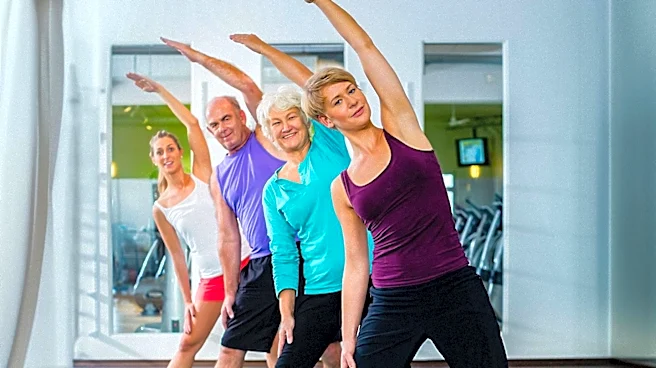
malls, libraries, cafes, and bars are either disappearing or becoming unaffordable, leading younger generations to seek community elsewhere. The gym offers a unique combination of health and social connection, allowing individuals to engage in a shared activity while building relationships. A ClassPass survey indicated that 53% of users aged 18-34 chose workout or wellness experiences over nightlife, and 51% suggested working out with friends instead of going to bars or restaurants. This trend highlights a broader societal need for accessible and affordable spaces for community building, especially as the U.S. Surgeon General declared loneliness and isolation an epidemic in 2023.
Why It's Important?
The rise of gyms as primary 'third places' signifies a notable shift in social dynamics and community formation, particularly for younger demographics in the U.S. This trend impacts various sectors, including the fitness industry, which is now evolving beyond mere health and wellness to become a crucial social infrastructure. The decline of traditional third places, often due to economic factors like rising rents and the 'retail apocalypse,' underscores a growing challenge in urban planning and public policy: the need for affordable, inclusive spaces that facilitate genuine human connection. If this trend continues, it could lead to increased investment in community-focused fitness centers and a re-evaluation of urban development strategies to incorporate more accessible social spaces. Conversely, businesses reliant on traditional social venues may face continued decline, necessitating adaptation to changing consumer behaviors.
What's Next?
The increasing reliance on gyms for social interaction suggests that fitness centers may further integrate community-building initiatives into their business models, offering more group classes, social events, and communal spaces. Urban planners and local governments might need to consider policies that support the creation or preservation of affordable and accessible 'third places' to combat rising loneliness and foster community cohesion. This could involve subsidies for community centers, libraries, or even public-private partnerships with fitness establishments. Furthermore, businesses in the hospitality and entertainment sectors may need to innovate to attract younger demographics, potentially by offering more value-driven experiences or integrating wellness components into their offerings. The long-term impact could also see a redefinition of what constitutes a 'social outing' for future generations.
Beyond the Headlines
This shift has deeper implications for public health and societal well-being. The gym's emergence as a social hub could contribute to improved physical and mental health outcomes, as individuals are more likely to engage in healthy activities when they are also fulfilling social needs. However, it also raises questions about inclusivity, as gym memberships, while often more cost-effective than frequent nights out, still present a financial barrier for some. The decline of diverse, spontaneous social spaces could also limit exposure to different viewpoints and social circles, potentially leading to more homogenous social interactions. Ethically, it prompts a discussion about the responsibility of communities and businesses to provide equitable access to spaces that foster connection, especially in an era where digital interactions often supersede face-to-face engagement. This trend reflects a broader societal adaptation to economic pressures and evolving social needs.