



What's Happening?
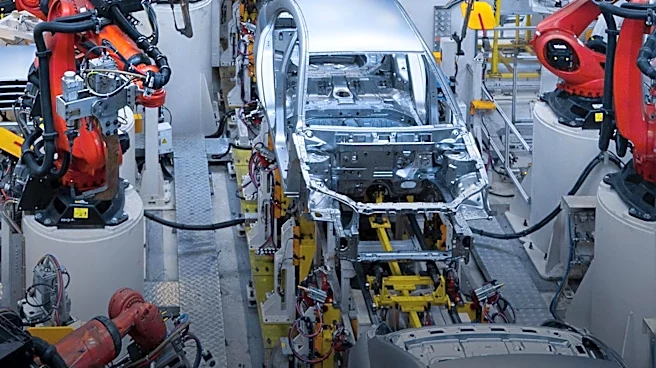
Ford CEO Jim Farley has articulated a vision for reinventing vehicle assembly, emphasizing new assembly platforms and advanced manufacturing processes. This comes as the United Auto Workers (UAW) faces significant challenges in the evolving automotive
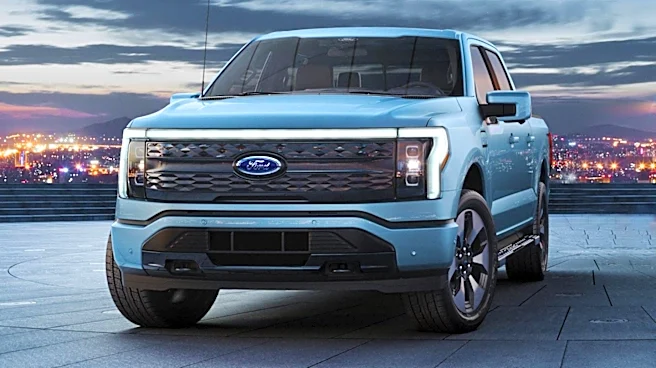
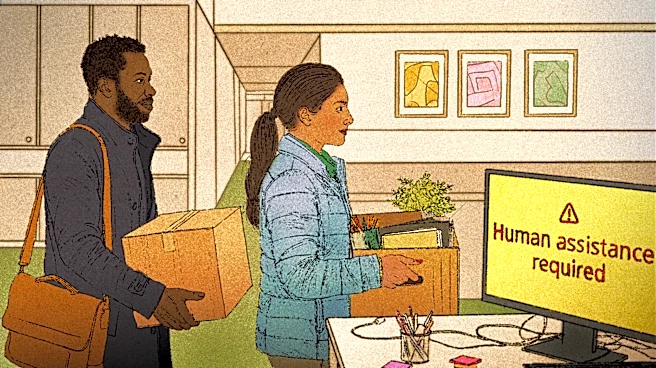
industry, including the chaotic corporate-led electric vehicle (EV) transition, the rise of non-union manufacturing in the South, and increasing automation. Farley's perspective on manufacturing, which includes the integration of cobots, humanoid robots, and AI-modified processes, suggests a future with potentially fewer human workers. The UAW, under President Shawn Fain, has adopted a more aggressive stance against concessions but is struggling to resist the impacts of EV rollbacks, plant closures, and mass layoffs. For instance, Ford's closure of the Kentucky BlueOval electric-vehicle battery facility, despite workers having voted to unionize, illustrates the challenges faced by the UAW in securing jobs amidst industry restructuring.
Why It's Important?
The intersection of Ford CEO Jim Farley's manufacturing vision and the UAW's struggle highlights a critical juncture for the U.S. automotive industry and its workforce. Farley's focus on advanced automation and new assembly platforms, while potentially increasing efficiency and competitiveness, poses a direct threat to traditional manufacturing jobs. This technological shift, coupled with the industry's pivot towards EVs, creates immense pressure on the UAW to adapt its strategies to protect workers' interests. The union's current trajectory, marked by a decline in membership and leverage, suggests a need for a more comprehensive approach that goes beyond traditional contract negotiations. The ability of the UAW to effectively counter job displacement from automation and the shift to non-union facilities in the South will determine the future of organized labor in the automotive sector and could influence labor relations across other industries facing similar technological disruptions.
What's Next?
The UAW is at a critical juncture, needing to develop a robust strategy for the future of manufacturing that addresses the challenges posed by automation and the EV transition. This includes strengthening organizing efforts in the South, where non-union production is growing, and potentially advocating for worker control over production decisions and industry planning. Ford, under Jim Farley's leadership, will likely continue to invest in advanced manufacturing technologies and new assembly platforms to enhance efficiency and competitiveness. The ongoing tension between corporate strategies focused on technological advancement and labor's efforts to secure jobs and fair working conditions will shape the future of the U.S. auto industry. The outcome of these dynamics could lead to significant changes in employment patterns, labor policies, and the overall economic landscape of manufacturing regions.
Beyond the Headlines
The deeper implications of Jim Farley's manufacturing vision and the UAW's challenges extend to the fundamental nature of work in the 21st century. The increasing integration of AI, robotics, and advanced assembly platforms in industries like automotive raises ethical questions about job displacement, the need for workforce retraining, and the potential for widening economic inequality. The UAW's struggle to adapt reflects a broader societal challenge: how to ensure a just transition for workers in an era of rapid technological change. This situation could catalyze a re-evaluation of labor's role in corporate decision-making, potentially leading to demands for greater worker participation in shaping manufacturing strategies and product development. The long-term impact could be a redefinition of the social contract between labor and capital, with implications for public policy, education, and social safety nets designed to support workers through industrial transformations.