



What's Happening?
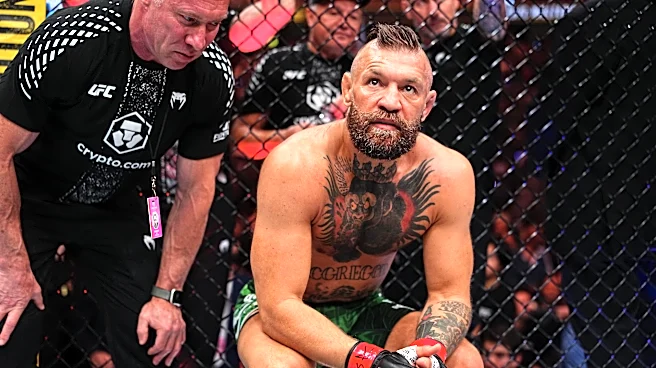
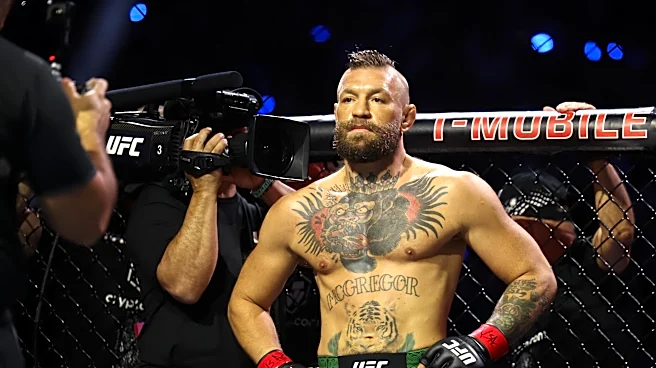
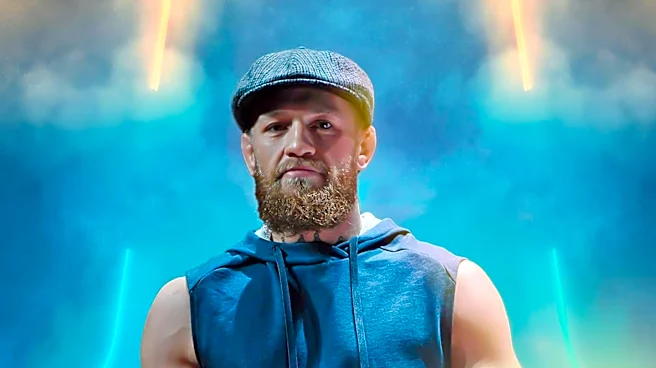
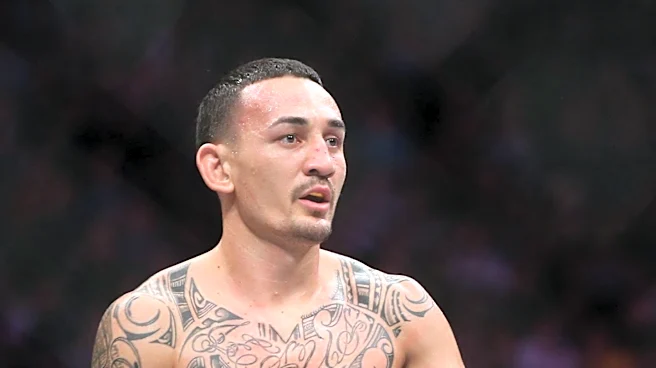
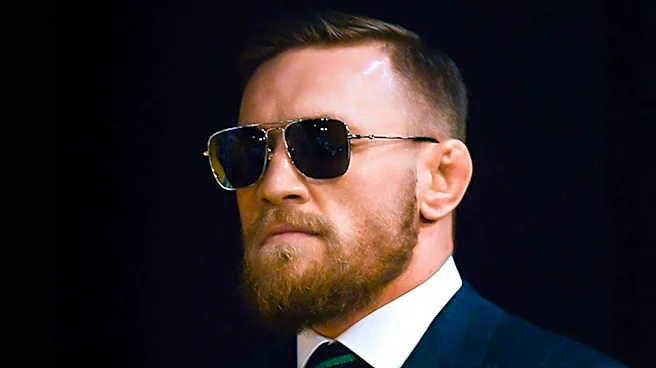
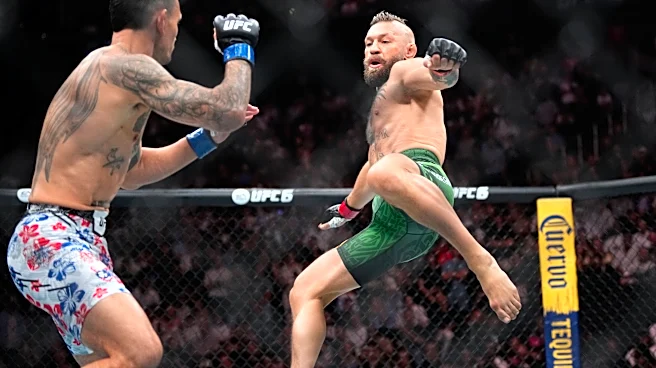
Conor McGregor faced a significant setback in his UFC career after losing to Max Holloway due to a knee injury during his return to the octagon. This match marked McGregor's comeback after a five-year hiatus, during which he had expressed confidence in his mental
and physical readiness. However, his knee gave out during his first attack, leading to an early end to the fight. Following the defeat, McGregor found solace in UFC announcer Bruce Buffer, who has known McGregor since his early days in the sport. Buffer recounted the emotional moment when McGregor, visibly distressed, leaned on him for support in the octagon.
Why It's Important?
This event is significant as it highlights the challenges faced by athletes returning to high-level competition after a long break. McGregor's injury and subsequent defeat could impact his career trajectory and marketability in the UFC. The emotional support from Bruce Buffer underscores the personal relationships and mental health aspects involved in professional sports. McGregor's determination to continue fighting, despite the setback, reflects the resilience often required in the sports industry. This incident may influence how athletes prepare for comebacks and address injuries, potentially affecting training and rehabilitation practices in the UFC.
What's Next?
Conor McGregor has announced his intention to continue fighting in the UFC, despite the recent defeat. He plans to undergo surgery to address his knee injury, which will be a critical step in his recovery and future in the sport. The UFC and McGregor's team will likely focus on his rehabilitation and strategic planning for his next fight. Fans and analysts will be watching closely to see how McGregor's career progresses post-surgery, and whether he can regain his former status in the UFC. The outcome of his recovery and return could influence future matchups and the UFC's promotional strategies.