






What's Happening?
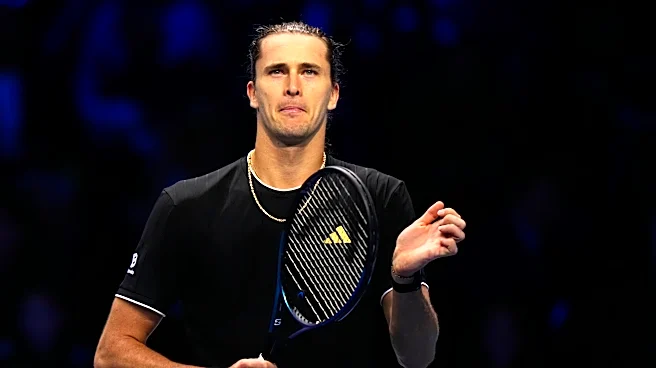
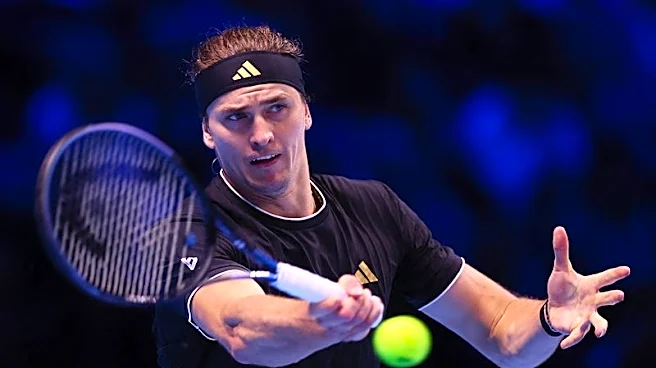
Alexander Zverev, confirmed as the year-end world number one in tennis, is defending his 3-9 record against top-ten opponents in 2026. Zverev, who secured two Grand Slam titles this year in Paris and New York, addressed the criticism following his opening
ATP Finals win over Rafael Jodar. He argued that his record is skewed by multiple losses to Jannik Sinner, whom he described as a 'robot,' and pointed out the significant turnover in the top ten rankings this year. Zverev highlighted that five new players entered the year-end top ten, a shift not seen since 2019. He asserted that his record against the players currently in the ATP Finals is 6-2, suggesting a stronger performance against the elite field.
Why It's Important?
This situation highlights the intense scrutiny and pressure faced by top athletes, even those achieving significant milestones like becoming world number one and winning multiple Grand Slams. Zverev's defense underscores a broader debate within professional sports regarding how performance metrics, such as head-to-head records against top-ranked players, are interpreted and used to evaluate an athlete's overall success. The rapid change in the top ten rankings, as noted by Zverev, suggests a dynamic and competitive landscape in men's tennis, where new talents are consistently challenging established players. This fluidity can make consistent performance against a constantly evolving elite group a complex measure of dominance, impacting public perception and sponsorship opportunities.
What's Next?
Zverev will continue to compete in the ATP Finals, aiming to cap off his season with another significant title. His performance in this tournament, particularly against other top-ranked players, will be crucial in either validating his defense or fueling further criticism. The ongoing discussion about the 'weakened field' in his Grand Slam victories and his record against top-ten opponents is likely to persist. As the tennis season concludes and a new one begins, the performance of emerging talents and the consistency of established stars will continue to shape the narrative around Zverev's reign as world number one and the overall competitiveness of the ATP tour.
Beyond the Headlines
The controversy surrounding Zverev's record against top-ten players touches upon the subjective nature of athletic achievement and the narratives constructed around it. While statistics provide objective data, their interpretation often involves qualitative judgments about the strength of competition and the context of victories. This scenario also reflects the psychological aspect of professional sports, where athletes must navigate public perception and media narratives while maintaining focus on their performance. The 'noise' Zverev refers to is a constant challenge for high-profile athletes, influencing their mental game and public image. The debate also raises questions about the long-term implications of a rapidly changing top-tier in tennis, potentially leading to more unpredictable tournaments and a wider distribution of major titles.