





What's Happening?
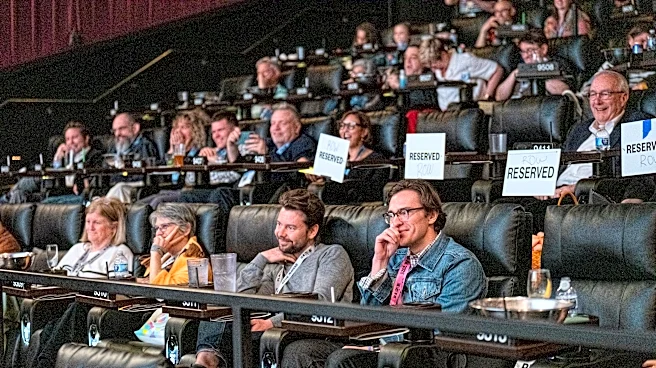
The American Film Market (AFM), an annual gathering in Los Angeles organized by the Independent Film & Television Alliance, recently concluded. This year's event saw 8,000 attendees, including sales and production companies, international film buyers,
filmmakers, producers, lawyers, managers, and business owners. The market serves as a crucial platform for licensing films for global distribution, with an estimated nearly $1 billion in deals transacted in previous years. A significant theme at this year's AFM was the success of independent films, such as 'Obsession,' which grossed $521 million worldwide on a $750,000 budget, and 'You Can See Everything,' a documentary that achieved box-office success. These films invigorated discussions about the audience demand for low-budget horror and the potential for documentaries to enter the cultural zeitgeist. Additionally, the market explored the growing trend of digital creators transitioning into filmmaking, with examples like the directors of 'Obsession,' 'Backrooms,' and 'Iron Lung' originating from online video platforms. Conversely, action films, traditionally popular at AFM, had a reduced presence due to declining theater attendance and a shift towards streaming and video-on-demand.
Why It's Important?
The American Film Market is vital for the independent film sector, acting as the primary U.S. hub for licensing films for international distribution. Its annual proceedings reflect and shape future trends in film production and acquisition. The success stories of low-budget independent films like 'Obsession' and 'You Can See Everything' signal a potential shift in audience preferences and investment strategies, encouraging producers to explore genres beyond traditional blockbusters. This could lead to more diverse cinematic offerings and opportunities for emerging filmmakers. The increasing influence of digital creators in filmmaking, as highlighted by keynote speaker Evan Shapiro, indicates a changing landscape for talent discovery and content creation, potentially democratizing access to the film industry. The decline in the presence of action films at AFM suggests a re-evaluation of their theatrical viability and a strategic pivot towards streaming platforms, impacting how these high-budget productions are financed and distributed. The market also serves as a testing ground for new projects, allowing production companies to gauge market interest and buyer demand.
What's Next?
Following the AFM, the deals initiated and trends identified are expected to influence film production slates and distribution strategies for the upcoming year. International buyers will proceed with licensing agreements, determining which films will reach audiences in various territories. The emphasis on successful low-budget horror and documentaries may encourage more investment in these genres, potentially leading to a surge in similar productions. Filmmakers and producers will likely continue to explore digital platforms as a breeding ground for new talent and ideas, further blurring the lines between online content creation and traditional filmmaking. The shift of action films towards streaming and video-on-demand will likely continue, prompting studios and distributors to adapt their release strategies for this genre. The insights gained from AFM will also inform discussions at subsequent major film markets, such as the Berlin International Film Festival in February and the Cannes Film Festival in May, as industry professionals continue to assess evolving market demands and audience behaviors.
Beyond the Headlines
The trends observed at the American Film Market point to deeper transformations within the entertainment industry. The success of independent films with modest budgets challenges the long-standing dominance of high-budget studio productions, suggesting a potential rebalancing of power within the film ecosystem. This could foster greater creative freedom and risk-taking among filmmakers, as financial barriers to entry potentially lower. The rise of digital creators transitioning into filmmaking signifies a broader cultural shift where traditional gatekeepers of content creation are being circumvented by direct-to-audience platforms. This evolution raises questions about intellectual property, talent development, and the future of film schools. Furthermore, the changing distribution landscape, particularly the move of certain genres like action films to streaming, highlights the ongoing disruption caused by digital platforms. This shift impacts not only revenue models but also the theatrical experience itself, prompting a re-evaluation of what constitutes a 'cinematic' release and how audiences consume film content in an increasingly fragmented media environment.