



What's Happening?
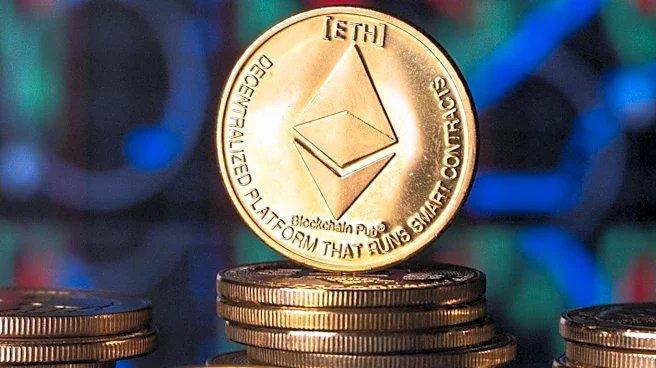
CoinShares, a Nasdaq-listed firm and Europe's largest crypto asset manager, has liquidated its entire corporate Ethereum treasury and half of its Solana holdings. This strategic move generated $19.3 million, which the company intends to use for a share
buyback program of up to $40 million. The decision, announced in October and further detailed in its November 18 earnings release by CEO Jean-Marie Mognetti, reflects the company's belief that its own shares offer better value at current valuations compared to the crypto assets it held. The sale included $16.6 million from Ethereum and $2.7 million from Solana. This action follows a trend where crypto companies are increasingly evaluating their own stock against their crypto holdings, with some, like Japan's Metaplanet, also cutting revenue forecasts and pointing to discounted stock. The timing of CoinShares' sale is notable, as Ethereum's price has declined approximately 24% since October 22.
Why It's Important?
This move by CoinShares is significant as it signals a shift in corporate treasury management within the crypto industry. For a major crypto asset manager to prioritize its own stock over holding prominent cryptocurrencies like Ethereum and Solana suggests a re-evaluation of capital allocation strategies. It indicates that some firms are finding more compelling investment opportunities in their own equity, especially when their shares are perceived as undervalued. This could influence other crypto companies to consider similar strategies, potentially leading to more corporate sales of crypto assets to fund share buybacks or other corporate actions. While the amount sold by CoinShares is a small fraction of Ethereum's total market value, it highlights a growing trend of institutional investors and crypto treasuries scrutinizing the value proposition of holding native tokens versus other financial instruments. This decision also underscores the volatility inherent in crypto assets and the need for robust treasury policies that can adapt to market fluctuations.
What's Next?
CoinShares' shares are anticipated to join the Russell 2000 index after December 11, which could attract index-tracking funds and potentially boost its stock value. This upcoming event might further validate the company's decision to invest in its own shares. The broader crypto market will likely observe if other crypto firms follow CoinShares' lead in divesting crypto holdings for share buybacks, especially if their own stock is trading at a discount. This could lead to increased scrutiny of crypto treasury management practices across the industry, with a potential emphasis on diversifying holdings beyond native tokens and stablecoins. Companies may also re-evaluate their risk budgets and stress-test their crypto allocations against significant price declines, as highlighted by industry experts. The Financial Accounting Standards Board's ASU 2023-08, effective for fiscal years beginning after December 15, 2024, will also require in-scope crypto assets to be measured at fair value, impacting how these assets are reported on corporate books.
Beyond the Headlines
The decision by CoinShares to sell off its crypto treasury assets for a share buyback reflects a maturing phase in the crypto industry, where companies are increasingly applying traditional financial principles to their digital asset holdings. This move highlights the tension between holding volatile crypto assets for potential long-term gains and managing corporate liquidity and shareholder value in the short to medium term. It also brings to the forefront the evolving landscape of corporate governance in the Web3 space, where decisions about asset mix, legal ownership, and accounting treatment are becoming critical. The shift towards prioritizing shareholder returns through buybacks, even at the expense of holding core crypto assets, suggests a growing emphasis on conventional financial metrics and investor confidence. This could lead to a more conservative approach to crypto treasury management, with a greater focus on stablecoins and diversified portfolios to mitigate volatility risks and ensure operational stability.